Whether expanding a laptop workstation or connecting a desktop to a projector, USB-to-VGA adapters offer flexible, plug-and-play video expansion. This guide highlights five reliable options to help you extend or mirror displays across monitors, TVs, and projectors. Each product supports up to 1080p or higher where noted, and is compatible with most Windows PCs. A quick buying table is included for comparison, followed by detailed product sections and a practical buying guide.
| Product | Key Feature |
|---|---|
| Mindorlen USB to VGA Adapter | |
| ELECABLE USB 3.0 to VGA Adapter (6.5FT) | |
| ELECABLE USB to VGA Adapter Cable (5FT) | |
| StarTech USB 3.0 to VGA Adapter | |
| Amazon Basics USB-C to VGA Adapter |
Mindorlen USB To VGA Adapter
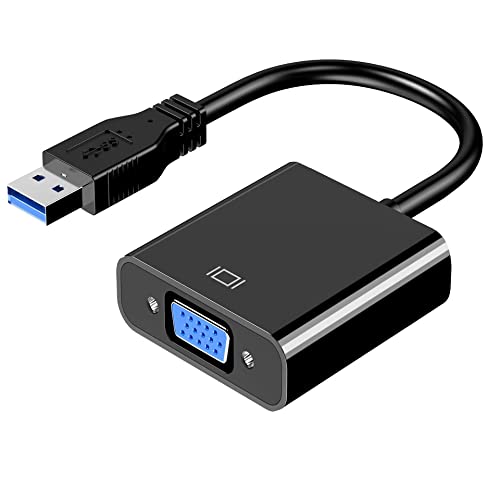
The Mindorlen USB to VGA Adapter connects USB-enabled devices (laptop, desktop) to VGA-enabled displays (monitor, projector, TV) to enable a multi-monitor setup. It supports extending workspaces with split-screen or mirroring displays. The device acts as an external graphics solution, delivering up to 1920 x 1080 resolution on compatible VGA displays. A USB 3.0 port is recommended to achieve high-resolution output, with backward compatibility to USB 2.0 systems. This option suits users seeking a straightforward, plug-and-play upgrade for additional screens.
ELECABLE USB 3.0 To VGA Adapter Cable (6.5FT)

This USB-to-VGA adapter cable enables a cost-effective dual-display setup by connecting a USB-enabled device to a VGA monitor or projector. It supports up to 1920×1080 at 60Hz via USB 3.0 and extends or mirrors your workstation across an additional screen. The product is compatible with Windows operating systems (11/10/8.x/7) and emphasizes a driver-assisted, stable performance. Notably, macOS Monterey or later and some ChromeOS/Linux environments may require driver considerations or alternative solutions.
ELECABLE USB To VGA Adapter Cable (5FT)

This ELECABLE USB to VGA adapter offers a compact solution for adding a second screen. It provides 1920×1080 resolution at 60Hz over USB 3.0, enabling extended or mirrored displays. The adapter is designed for Windows systems (11/10/8/7) and aims to deliver reliable performance through a dedicated chipset. Like similar products, it may not support macOS Monterey or higher, or devices without driver installation capability. The 5-foot cable length adds flexibility for desktop or laptop setups.
StarTech USB 2.0 To VGA Adapter

The StarTech USB 2.0 to VGA Adapter provides a straightforward way to connect a USB-enabled computer to a VGA monitor. It supports up to 1920×1200 displays and is framed as a slim, external graphics solution. This option emphasizes Windows compatibility and requires the appropriate drivers for operation. It is especially suitable for users seeking a lightweight, portable VGA expansion via a single USB port. Note that macOS, ChromeOS, and Linux support are not included for this model.
Amazon Basics Aluminum USB-C To VGA Adapter

The Amazon Basics USB-C to VGA Adapter enables a direct USB-C to VGA connection, suitable for USB-C enabled laptops and devices. It supports HD video resolutions up to 1920×1200 or 1080p and offers plug-and-play operation with no external drivers required. This option is ideal for users with USB-C laptops seeking a simple, portable VGA upgrade, especially when a quick presentation setup is needed.
Buying Guide: Key Purchase Considerations
- Resolution and refresh rate: Check if the adapter supports 1080p at 60Hz or higher for smooth video and clear text. Some models offer up to 1920×1200 or 1920×1080 at 60Hz.
- USB version and compatibility: USB 3.0/3.1 is typically required for higher resolutions; USB 2.0 adapters may be limited to lower performance. Confirm OS compatibility (Windows vs. macOS) and driver requirements.
- Port type on source device: Choose based on USB-A vs USB-C. USB-C hubs may provide additional ports but ensure full functionality with VGA output.
- Driver installation: Some adapters need drivers; others are plug-and-play. Consider your IT environment and whether driver installation is feasible.
- Cable length: Longer cables offer flexibility for desktop setups, but excessive length can impact signal quality. Match length to your space needs.
- Multiple display goals: Decide between extending your workspace or mirroring content. Some adapters support both; others are limited to one mode.
- Device support expectations: Note that certain adapters do not support ChromeOS, Linux, or macOS on newer builds. Verify compatibility with your device before purchasing.
- Form factor and portability: For travel or presentations, a compact adapter or cable-style option may be preferable to bulkier units.
When selecting a USB-to-VGA adapter, weigh the need for resolution, OS compatibility, and the desired setup (extension vs mirroring). For Windows-heavy environments, all listed options provide solid performance, with varying driver requirements and cable lengths. USB-C models are particularly convenient for newer laptops, while USB-A options work broadly across older devices. This guide presents a practical mix of 5 adapters to cover common use cases for American readers seeking reliable VGA expansion through USB.