The right weather radio can be a critical lifeline during storms, power outages, and wilderness excursions. This guide highlights five reliable options that balance NOAA weather alerts, multiple charging modes, and practical outdoor features. Each product is evaluated for portability, power options, alert capabilities, and overall usefulness for camping and emergency scenarios. Use the quick reference below to compare core specs at a glance.
| Product | Brand | Power Options | Key Features |
|---|---|---|---|
| FosPower Emergency Weather Radio (Model A1) | FosPower | Solar, Hand Crank, USB, AAA Backup | 7400mWh power bank, SOS alarm, LED light |
| Emergency Hand Crank Radio with LED Flashlight | RunningSnail | Solar, Hand Crank, USB | 2000mAh power bank, LED flashlight |
| Midland ER210 NOAA Emergency Weather Radio | Midland | Solar, Hand Crank, Rechargeable Battery | NOAA alerts, SOS flashlight beacon |
| Raynic Emergency Radio | Raynic | 6-way charging (solar, hand crank, USB, AC, batteries) | NOAA alert, large display |
| TFTDOUP Emergency Radio Hand Crank Solar | TFTDOUP | Hand Crank, Solar, Type-C | 20000mAh large battery, SOS, flashlight |
Note: All products listed below are suitable for camping and emergency use, offering NOAA weather alerts and multiple ways to stay powered when traditional electricity is unavailable.
FosPower Emergency Weather Radio (Model A1)

The FosPower FOSPWB-2376 radio combines essential NOAA/AM/FM weather alerts with a robust 7400mWh (2000mAh) power bank. Three power sources support staying powered: crank, solar, and USB, with AAA batteries providing a fallback. Two light sources include a 4-LED reading light and a 1W flashlight, which helps in emergencies or at camp after dark. This model emphasizes reliability when traditional power is unavailable and supports device charging to keep phones or tablets online during critical moments.
Emergency Hand Crank Radio With LED Flashlight
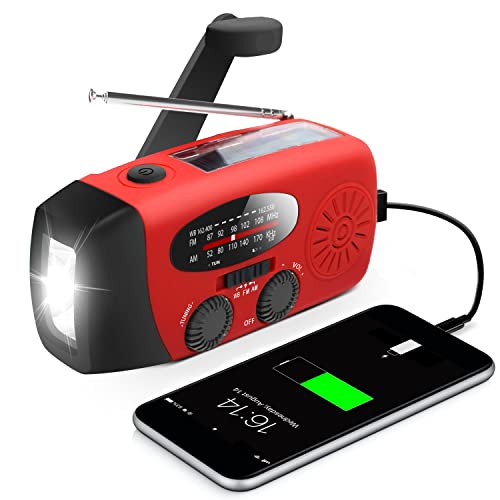
This RunningSnail weather radio prioritizes three-way power (hand crank, solar, USB) and includes a built-in 2000mAh Li-ion power bank for charging phones or small devices. The device is positioned as a family-safety tool, capable of reporting weather alerts and providing a rugged LED flashlight for nighttime visibility. Its tri-source design makes it suitable for prolonged outages or camping trips where a steady power supply is uncertain.
Midland ER210 NOAA Emergency Weather Radio

The Midland ER210 focuses on NOAA weather scanning with automatic alerts. It includes multiple power options: built-in solar charging, a hand crank, and a rechargeable battery, delivering resilience during outages. The SOS flashlight beacon adds a signaling capability, while the compact form makes it portable for camping. This model is well-suited for users prioritizing automatic weather updates and emergency signaling alongside basic radio reception.
Raynic Emergency Radio

The Raynic model emphasizes a large display and a six-way charging system, including solar, hand crank, USB, AC adapter, and three AAA batteries. Automatic NOAA alerts provide timely warnings, and the radio supports AM/FM/SW bands for broad reception. Its user-friendly interface and multiple power options make it a versatile option for both home emergency kits and outdoor adventures where consistent power is a concern.
TFTDOUP Emergency Radio Hand Crank Solar

The TFTDOUP option packs a substantial 20000mAh battery into a compact emergency radio, delivering more than 50 hours of FM playback and multiple charging methods (hand crank, solar, Type-C). It provides NOAA weather alerts, SOS, a built-in flashlight, and a reading lamp, making it a strong all-in-one survival device for camping or power outages. The large battery and robust charging options are designed for longer trips or extended outages where power is scarce.
Buying Guide
When selecting a weather radio for camping, consider these key factors to balance safety, convenience, and durability:
- NOAA Weather Alerts: Ensure the device supports automatic weather alerts for timely warnings in your area.
- Power Options: A mix of solar, hand crank, USB, and battery backups extends usable time in the field. Higher capacity batteries offer longer operation between charges.
- Reception Range: Look for models with AM/FM and, if possible, shortwave or weather bands to maximize station availability in remote areas.
- Durability and Portability: Choose rugged construction with a compact form and a protective housing suitable for backpacks, tents, and outdoor environments.
- Outgoing Features: Built-in flashlights, SOS signals, reading lamps, and device charging capabilities add practical value for camping and emergencies.
- Ease of Use: A clear interface, accessible controls, and readable displays assist quick setup during stressful weather events or outages.
- Upgrade Considerations: If you frequently camp in areas with long outages, prioritize higher-capacity batteries and faster charging options, such as USB-C.
- Price vs. Value: Compare core capabilities (alerts, power duration, and reliability) against price to choose the best overall value for your needs.