Moisture detection is critical for preventing structural damage, mold growth, and energy inefficiency. The following thermal imaging cameras are selected for their ability to reveal hidden leaks, insulation gaps, and moisture pockets with high resolution, intelligent scene detection, and user-friendly interfaces. Each product emphasizes accurate temperature readings, fast anomaly recognition, and practical features for home and professional inspections.
| Product | Brand | Key Benefit |
|---|---|---|
| HP96 Thermal Imaging Camera | HSFTOOLS | Intelligent Scene Detection for quick leaks and insulation gaps |
| P2W 640×480 Super Resolution | HSFTOOLS | High-resolution imaging with dual cameras and intelligent scene alerts |
| F2W Thermal Camera | HSFTOOLS | Super resolution, Pro Scene alarms, app integration |
| HF96V Thermal Camera | HSFTOOLS | Dual cameras, live super resolution, broad temperature range |
| F2VW Thermal Camera | HSFTOOLS | Dual-camera versatility, 640×480 imaging, Wi‑Fi sharing |
Each option focuses on moisture detection capabilities, with features such as real-time temperature tracking, automatic anomaly alerts, and visualization modes that help distinguish wet areas from dry surroundings. The selections balance image clarity, ease of use, and data sharing options to support both DIY homeowners and professional inspectors.
HP96 Thermal Imaging Camera
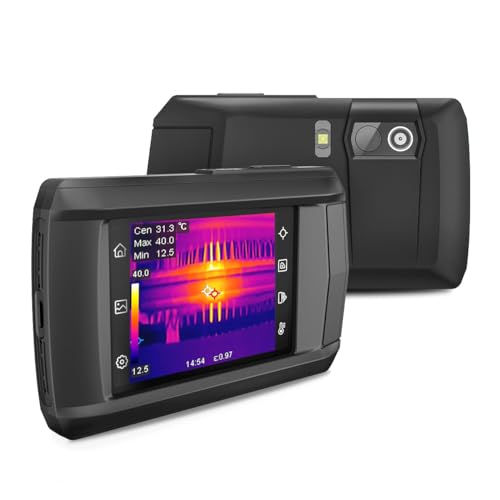
The HP96 model from HSFTOOLS combines a 3.5″ touch screen with a visual camera, delivering 240 x 240 super resolution alongside 96 x 96 IR resolution. Its IntellFault intelligent scene recognition automatically spots water leaks and insulation gaps by leveraging deep learning, expediting moisture inspections. The device supports live video and audio recording, and a built-in LED flashlight aids inspections in low-light spaces. A 50° field of view enables efficient coverage of larger areas, while real-time tracking highlights maximum, minimum, and center temperatures, enabling quick detection of anomalies such as damp zones or leaks. Custom temperature thresholds provide immediate alerts when moisture-related hotspots emerge.
Strengths for moisture work include automated scene detection, easy operation via a smartphone-like UI, and lightweight design that fits into tight spaces. The camera’s broad operating range (-4°F to 662°F) accommodates typical indoor moisture scenarios, from cold damp walls to warm, humid attic spaces. While offering solid performance, users should ensure firmware is up to date to maximize scene recognition accuracy and explore “Scene” in settings for enhanced moisture insights.
P2W 640×480 Super Resolution Thermal Camera

The P2W offers superior thermal imaging with a 640×480 resolution via HSFTOOLS’ Live Super Resolution, paired with a 25 Hz frame rate and sub-40 mK sensitivity. This combination yields crisp, detailed visuals ideal for distinguishing moisture pockets behind walls or within insulation layers. Its dual-camera setup (IR plus visible) supports multi-mode viewing: Visual, Thermal, Fusion, and Picture-in-Picture, aiding inspectors who need contextual clues to confirm moisture issues. Intelligent scene detection (IntellFault) and Pro Scene Color Alarm rapidly flag suspected leaks or insulation voids, while built-in storage and microphones support comprehensive recording for documentation and reporting.
Practical advantages include flexible image modes and the ability to share analyses via Wi‑Fi, along with robust software options for later analysis. The system is suited for both beginners learning moisture detection and seasoned professionals needing dependable, high-detail imagery to validate moisture-related findings during renovations or preventive maintenance.
F2W Thermal Camera

The F2W model provides 640×480 super resolution and a 3.2″ screen, driven by HSFTOOLS’ Live Super Resolution and low-noise imaging (sub-40 mK). A 25 Hz refresh rate maintains smooth video during inspections, while dual cameras (IR and visible) enable four image modes (Visual, Thermal, Fusion, PIP) and seven color palettes to highlight moisture indicators against different textures and materials. Its Pro Scene Color Alarm analyzes environmental data to alert you to abnormal moisture or insulation issues, improving detection consistency. Wi-Fi connectivity enables straightforward sharing via the HSF Studio PC software or mobile app, making it easier to create reports for clients or stakeholders.
This camera is well-suited for rapid moisture surveys in homes and commercial spaces, as well as for detailed follow-up inspections after remediation work. The inclusion of a carrying case and app-based workflow helps teams document moisture progress over time and communicate findings clearly.
HF96V Thermal Camera With Visual Camera
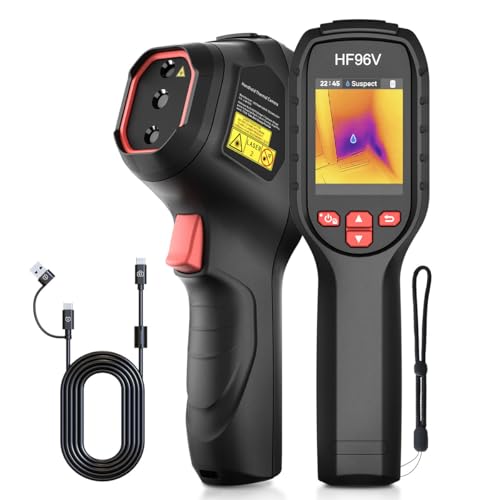
The HF96V integrates a 96×96 IR sensor with a 640×480 visible camera, offering Fusion, Thermal, and Visual image modes to refine moisture detection. Live Super Resolution pushes from 96×96 to 240×240 in real-time, delivering sharper details in damp areas. Its 50° field of view provides broad coverage, while a wide -4°F to 1022°F temperature range captures both cool damp surfaces and hot moisture sources. Temperature tracking highlights maximum, minimum, and central points, and alarms can be set for preset thresholds to flag potential moisture-related anomalies. This setup makes it particularly useful for inspecting pipe leaks, insulation gaps, and concealed damp spots through walls or ceilings.
Ideal for building diagnostics and HVAC-related moisture checks, the HF96V emphasizes clarity and quick actionable insights. The IP54 rating adds durability for field use, though users should handle the device in dusty or wet environments with care and follow maintenance guidelines for the camera’s sensors and optics.
F2VW Thermal Camera

The F2VW model combines 256×192 IR resolution with a 640×480 super resolution output, featuring a 3.2″ touchscreen and 16 GB storage. It includes a 2MP visible camera and dual-camera workflow to capture contextual moisture clues alongside thermal data. The device supports app-based image transfer and PC analysis, enabling broader reporting options. A 25 Hz frame rate and sub-40 mK sensitivity deliver sharp thermal details, essential for spotting moisture behind drywall or under floors. The inclusion of a carrying case helps protect equipment during on-site moisture surveys, and the Wi-Fi connection facilitates quick sharing of findings with colleagues or clients.
Strengths for moisture work include robust image versatility, careful data management, and practical on-site workflow. While the model excels in rapid inspections, users should consider the learning curve associated with multiple capture modes and ensure compatibility with preferred analysis software for moisture documentation.
Buying Guide: Key Purchase Considerations
- Resolution and sensitivity: Higher IR resolution (e.g., 640×480) and lower thermal sensitivity (mK) reveal finer moisture details. For most moisture detection tasks, aim for at least 256×192 IR with sub-40 mK sensitivity.
- Dual cameras and image modes: Cameras with both infrared and visible sensors (or fusion modes) help correlate moisture signs with physical features. Look for Visual, Thermal, Fusion, and PIP modes for versatility.
- Intelligent scene detection: Features like IntellFault automatically identify potential leaks or insulation gaps, speeding up inspections and reducing manual interpretation time.
- Field of view and temperature range: A wider field of view improves coverage in large spaces, while a broad temperature range captures both cold damp surfaces and warm moisture sources, reducing missed spots.
- On-device storage and reporting: Built-in storage, easy photo/video capture, and reporting tools simplify documentation. App-based transfer or PC software assists with analysis and client reports.
- Ease of use: A user-friendly interface with a predictable workflow minimizes onboarding time. A touchscreen UI and straightforward controls help ensure accurate measurements in the field.
- Durability and form factor: Compact, lightweight cameras are advantageous for crawl spaces and attics. Consider IP ratings and ruggedness based on typical job sites.
- Battery life: For longer inspections, consider devices with extended battery life or hot-swappable options to avoid interruptions.
- Software ecosystem: Check compatibility with your preferred analysis tools, reporting templates, and whether firmware updates add new scene detection features or palettes for moisture visualization.
- Price-to-value balance: While higher-end models offer more features, ensure core moisture-detection capabilities align with your needs and frequency of use.
In selecting a moisture-detection thermal camera, prioritize image clarity, reliable scene detection, and flexible data sharing. The options above provide varying balances of dual-camera setups, super-resolution capabilities, and on-site usability to support accurate moisture assessments across residential and commercial projects.