Solar powered trail cameras offer reliable, self-sustaining monitoring for wildlife, farms, and remote properties. This guide highlights five standout models that combine solar charging, high-resolution imaging, and practical app or remote access features. Whether you need 4K video, long battery life, or cellular connectivity, these selections help you monitor outdoor spaces without frequent battery changes or wired power sources.
| Product | Brand | Key Power Feature | Imaging / Video | Connectivity |
|---|---|---|---|---|
| MAXDONE Solar Trail Camera WiFi Bluetooth – 4K 64MP | MAXDONE | 6000mAh Battery, Solar Charging | 4K video, 64MP stills | WiFi (built-in hotspot), Bluetooth |
| MAXDONE Solar Trail Camera WiFi Bluetooth – 48MP | MAXDONE | 5200mAh Battery, Solar Charging | 48MP photos, 1296P@30fps video | WiFi (TrailCam Go app) |
| Assark Solar Trail Camera 48MP 30FPS | Assark | Solar Powered, 32GB SD Card included | 48MP photos, 30FPS video | WiFi & Bluetooth |
| Solar Trail Camera WiFi Bluetooth – MAXDONE | MAXDONE | 5200mAh Battery, Solar Charging | 64MP photos, 4K video | WiFi & App Control |
| Solareye Trail Camera WiFi – 4K 64MP | Solareye | 5000mAh Battery, Solar compatible | 64MP photos, 4K video | WiFi & Bluetooth, TrailCam Go app |
Note: This table provides a quick snapshot of each model’s power capabilities, imaging quality, and connectivity. For detailed features and limitations, explore the product sections below.
MAXDONE Solar Trail Camera WiFi Bluetooth – 4K 64MP
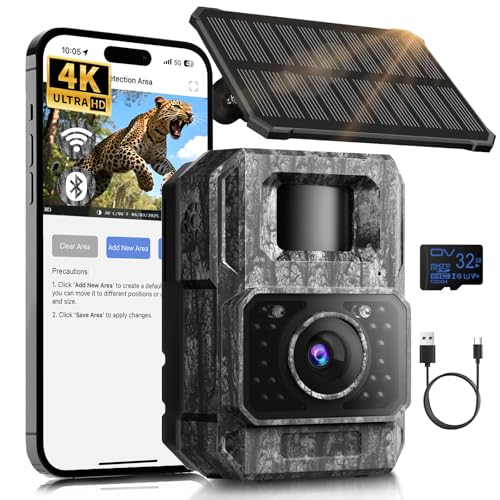
- Impressive 4K video and 64MP still imagery for crisp wildlife captures.
- Up to 6000mAh rechargeable battery supports multiple charging modes including solar and USB-C.
- Upgraded split solar panel design allows flexible placement and improved charging efficiency.
- Important note: This camera creates its own short-range hotspot for setup and downloads; it does not connect to home Wi-Fi or remote viewing.
- Rugged IP66 enclosure suitable for outdoor use in varying weather.
MAXDONE Solar Trail Camera WiFi Bluetooth – 48MP 30fps

- Integrated solar panel and 5200mAh battery deliver extended outdoor monitoring without frequent battery changes.
- WiFi and Bluetooth with the free TrailCam Go app, enabling direct viewing and downloading to a phone within range (no cellular service needed).
- 48MP stills with 1296P@30fps HD video provide clear captures, particularly in daylight.
- Long standby time and no monthly fees; built-in hotspot facilitates setup and transfers.
Assark Solar Trail Camera 48MP 30FPS

- Efficient solar power with a large panel and rechargeable battery to extend autonomous operation.
- IP66 waterproof construction designed for harsh outdoor conditions.
- Includes a 32GB micro SD card and supports up to 256GB; features Time Stamp, Time Lapse, and Loop Recording.
- Built-in Wi-Fi and Bluetooth for app-based control and quick downloads; note compatibility with TrialCam Go app and its hotspot connection.
Solar Trail Camera WiFi Bluetooth – 5200mAh
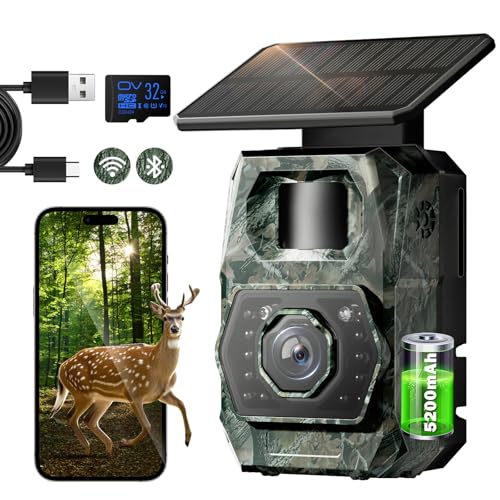
- Built-in 5200mAh rechargeable battery paired with solar charging for energy efficiency.
- WiFi and app control enable remote setup and transfers from a smartphone within range; hotspot is used for initial connection.
- 65-foot night vision with low-glow infrared helps minimize wildlife disturbance while capturing fast action.
- Outdoor-ready design suitable for gardens, wildlife monitoring, and hunting setups.
Solareye Trail Camera WiFi – 4K 64MP

- Solar powered with a 5000mAh internal battery and optional portable solar panel to extend standby time.
- 4K video and 64MP stills deliver high-quality wildlife footage with sharp detail.
- Integrated 940nm no-glow infrared with adaptive fill light to reduce disturbance at night.
- Wi-Fi and Bluetooth enable app control via TrailCam Go; note that home WiFi is not supported.
Buying Guide
When choosing a solar powered trail camera, consider these factors to match your monitoring needs and environment:
- Power options: Look for models with rechargeable lithium batteries and solar charging capability. Some include portable solar panels for deeper field use or long deployments in remote areas.
- Image and video quality: Higher megapixels and 4K video produce clearer captures, especially for distant wildlife. Evaluate low-light performance and infrared range for night surveillance.
- Connectivity: Decide between cellular (4G/5G) for remote viewing and non-cellular cameras that rely on local storage and hotspot setup. Apps like TrailCam Go offer convenient control and sharing, but some cameras operate without home Wi-Fi.
- Storage and memory: Check SD card compatibility (capacity and speed) and whether a microSD is included. Larger cards support longer recording cycles in high resolution.
- Durability: IP ratings (IP66/IP65) indicate water resistance. Rugged housings protect against dust, rain, and impact in outdoor settings.
- Field installation: Solar panel placement affects charging efficiency. Designs with adjustable panels or multiple mounting options improve sun exposure throughout the year.
- Privacy and data handling: Some cameras route data locally via hotspot; others upload to cloud services. Review app privacy features and any data sharing options.
These considerations help determine the balance between power independence, capture quality, and remote access. For wildlife researchers, rural property managers, or outdoor enthusiasts, solar powered trail cameras provide flexible, low-maintenance monitoring with varying levels of connectivity and image fidelity.
Comparative Notes
– Models with built-in cellular capabilities (4G) give you real-time viewing from distant locations, but may require ongoing data plans. – Cameras with built-in Wi-Fi and app control are ideal for near-field setups where you can connect via a portable hotspot but may not support home Wi-Fi. – Higher megapixel counts and 4K video benefit detailed wildlife studies and property surveillance, yet demand larger storage and more power. – The best solar trail cameras balance energy efficiency with reliable night vision, minimizing disturbance to animals during filming.