Professional photographers rely on fast, durable memory cards to keep up with demanding shoots. The following selection focuses on high-speed SDXC cards that deliver robust read/write speeds, reliable performance, and ample capacity for 4K video, burst shooting, and long sessions. Each option is designed to minimize lag, reduce offload times, and maximize on-camera efficiency. Below you’ll find five top choices with key features to help you choose the right card for your workflow.
Summary of chosen products:
| Product | Brand | Capacity | Key Speeds | Best For |
|---|---|---|---|---|
| Extreme PRO SDXC UHS-I | SanDisk | 128 GB | Up to 200 MB/s read, up to 90 MB/s write | 4K, burst shooting |
| Extreme PRO SDXC UHS-I | SanDisk | 256 GB | Up to 200 MB/s read, up to 140 MB/s write | High-capacity 4K/4K+ workloads |
| Professional 1667x SD Card | Lexar | 128 GB | Up to 250 MB/s read | Professional photography, long shoots |
| Professional Silver SD Card | Lexar | 256 GB | Up to 205 MB/s read, up to 140 MB/s write | 4K video and fast transfers |
| Extreme PRO SDXC UHS-II | SanDisk | 128 GB | Up to 300 MB/s read/write | 6K/8K and cinema-grade work |
Note: Performance varies with host devices, card readers, and workflow. Always format cards in-camera for reliability and maintain proper backups during shoots.
SanDisk 128GB Extreme PRO SDXC UHS-I
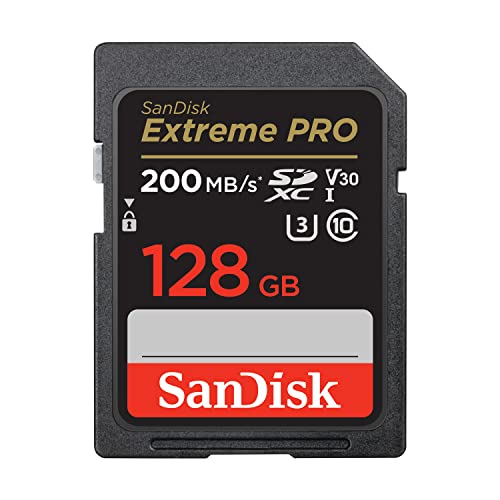
This card is engineered for speed with SanDisk QuickFlow Technology, delivering read speeds up to 200 MB/s and write speeds up to 90 MB/s. It is optimized for rapid offloads and smooth performance when capturing 4K UHD footage or high-frame-rate bursts. Compatibility with devices capable of maximizing QuickFlow speeds is important for achieving the noted performance. The card is designed to work with, and can be paired with, the SanDisk Professional PRO-READER SD to reach maximum transfer rates. It supports high-speed shooting, making it a strong option for professionals needing quick transfers and reliable media storage in demanding environments.
Key considerations: consider your camera’s write speed, buffer, and your workflow. If you routinely offload on location to a high-end reader, you’ll likely see the full benefits of the 200 MB/s read speeds, though real-world results depend on host hardware and card reader performance. The card’s 128 GB capacity is suitable for wedding, event, or travel assignments where high-speed transfer saves valuable time between shoots.
SanDisk 256GB Extreme PRO SDXC UHS-I

With the same QuickFlow technology family, this 256 GB card promises up to 200 MB/s read and up to 140 MB/s write speeds, delivering fast offloads and sustained performance for long shoots or high-bitrate 4K video. It is designed to maximize speed when paired with high-end readers like the SanDisk PRO-READER, which can further enhance throughput. The 256 GB capacity supports extended sessions without frequent card changes, useful for photographers who shoot high-resolution images and 4K footage in busy environments.
Important notes: storage capacity is listed as user-accessible, and actual available capacity may be slightly less. Real-world speeds depend on the host device, interface, and file sizes. This card is a fit for photographers who need a balance of speed and larger storage for day-long events or multi-day assignments.
Lexar 128GB Professional 1667x SD Card

Lexar’s 128 GB Professional 1667x SD Card leverages UHS-II technology with a read speed up to 250 MB/s. This speed designation supports rapid offloads and efficient handling of high-bitrate modes, enabling photographers to capture more frames before needing to transfer. The card is designed for professionals who shoot extended sessions—whether DSLR, mirrorless, or advanced camcorders—and need fast transfers to reduce downtime between takes. Large capacities help minimize card changes on long shoots or when shooting a mixture of RAW stills and 4K video.
Considerations: UHS-II cards require compatible readers to realize their full speed; ensure your workflow includes a capable reader. While read speeds reach 250 MB/s, write performance may vary by device; for action or event photography, high sustained write rates are crucial to prevent buffering delays.
Lexar 256GB Professional Silver SD Card

This Lexar card offers up to 205 MB/s read and up to 140 MB/s write speeds, enabling efficient transfers and reliable performance for 4K video recording. The 256 GB capacity is well-suited for extended sessions, high-resolution stills, and professional-grade footage, reducing the need for frequent offloads. The V30 class rating supports sustained video capture at high bitrates, helping ensure smooth 4K footage during long shoots. The card’s Silver branding reflects Lexar’s emphasis on professional-grade reliability and performance.
Practical considerations: ensure your camera and reader support the 205 MB/s read speed to maximize performance. For photographers who shoot a mix of stills and 4K video, this card provides a comfortable balance of speed and capacity, with headroom for longer sessions without swapping cards mid-shoot.
SanDisk 128GB Extreme PRO SDXC UHS-II

Designed for professionals using MIL and cinema cameras, this card supports 6K and 4K UHD capture with Video Speed Class 60. While V60 rating indicates robust sustained write performance, actual speeds can vary based on host device and file attributes. The card supports burst shooting and time-lapse capabilities with shot speeds up to 100 MB/s, enabling continuous capture during critical moments. Capacity remains at 128 GB, suitable for high-quality shoots where rapid transfer and reliable media are essential.
Guidance: verify that your camera and reader are compatible with UHS-II to unlock the full 300 MB/s potential in ideal conditions. This card is aligned with high-end productions where cinema-grade formats and high-bitrate workflows demand dependable, fast storage with ample headroom for 6K and 8K ambitions.
Buying Guide: Key Purchase Considerations
- Speed Class and Read/Write Rates: For still photography, high read and sustained write speeds reduce buffer delays. For video, focus on V30, V60, or higher, and UHS-I vs UHS-II depending on your camera’s compatibility.
- Capacity: Professionals often balance between 128 GB, 256 GB, and higher. Higher capacities minimize card changes on long sessions but come at a price premium. Plan for your typical shooting volume and backup strategy.
- Device and Reader Compatibility: Max speeds depend on host device, camera, and card readers. Some readers unlock the highest speeds only with UHS-II or specific SanDisk/Lexar models. Ensure your workflow includes a capable reader when needed.
- Durability and Reliability: Look for cards with robust build quality and proven reliability in varied environments—extreme temperatures, humidity, or rugged shoots.
- Workflow Fit: If your editing and transport workflow benefits from rapid offloads, prioritize cards with higher read speeds and consider pairing with a fast reader for on-site offloads.
- Format and Backup Strategy: Always format cards in-camera before shoots and maintain a workflow that includes immediate backups to avoid data loss. Consider multiple cards and redundancy for critical assignments.
In summary, the cards listed here cover a spectrum from high-speed UHS-I options to UHS-II and cinema-grade formats. Depending on your camera system, shooting style, and on-location needs, these choices can help you optimize transfer times, capture reliability, and capacity for professional photography and video work.