If you’re organizing large photo libraries, video shoots, or client galleries, a reliable external hard drive is essential. This guide highlights top options for photo storage—compact, high-capacity, and easy to use with Windows, Mac, and popular gaming consoles. All picks offer straightforward drag-and-drop backup and plug-and-play setup, with options spanning portable and desktop forms. Read on to compare features, speeds, and compatibility to find the right match for your workflow.
| Product | Brand | Capacity | Type |
|---|---|---|---|
| Seagate Portable 2TB External Hard Drive | Seagate | 2TB | Portable |
| Seagate Portable 5TB External Hard Drive | Seagate | 5TB | Portable |
| Seagate Portable 1TB External Hard Drive | Seagate | 1TB | Portable |
| WD 2TB Elements Portable External Hard Drive | WD | 2TB | Portable |
| Seagate Expansion 8TB External Hard Drive | Seagate | 8TB | Desktop |
Seagate Portable 2TB External Hard Drive

The Seagate Portable Drive offers ample 2TB capacity in a compact, USB-powered form. Suitable for Windows or Mac, it’s designed for easy drag-and-drop backups without software. Its simple setup makes it ideal for photographers who need to move files quickly between on-site shoots and a main workstation.
Seagate Portable 5TB External Hard Drive

With a generous 5TB capacity, this portable drive is ideal for photographers with large archives or ongoing shoots. It supports Windows and Mac, and backup is as simple as drag-and-drop. Quick setup means you can start organizing images right away, making it a practical solution for expanding photo libraries.
Seagate Portable 1TB External Hard Drive
This 1TB option provides a compact, go-anywhere solution for photographers who need frequent on-the-go backups. It works with Windows or Mac and emphasizes the ease of automatic recognition once connected to a computer, simplifying initial setup for field work and in-studio tasks.
Seagate Expansion 8TB External Hard Drive

A desktop solution with 8TB of space, the Seagate Expansion is designed for stationary use and large photo libraries. It offers straightforward plug-in power and USB 3.0 transfers for rapid file movement. This model suits photographers who curate extensive portfolios and require a durable, high-capacity drive at a fixed workstation.
WD 2TB Elements Portable External Hard Drive

The WD Elements line emphasizes compact size and plug-and-play usability. With up to 2TB of capacity in a small enclosure, it’s well-suited for on-the-go photo storage. The drive is designed for easy expansion and compatibility with PC and Mac systems, supporting straightforward file transfers and backups.
Techkey 256GB USB 3.0 Flash Drive for iPhone
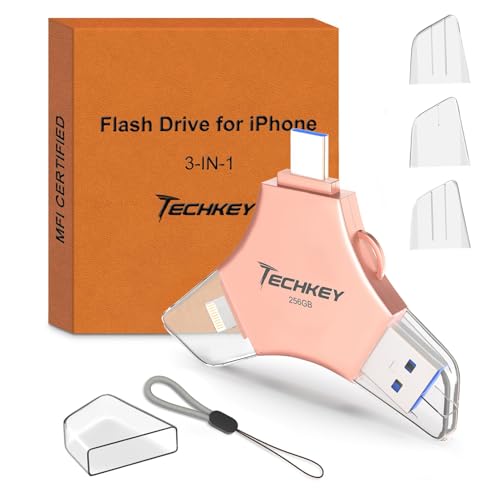
While not a traditional external hard drive, this 256GB flash drive offers cross-platform compatibility with iPhone, Android, PC, and Mac. It provides portable, on-the-go storage for photos and videos, with MFi certification and multiple interfaces to accommodate diverse workflows, including quick transfers between devices.
Maxone 500GB Ultra Slim Portable Drive

The Maxone drive offers an ultra-slim design with aluminum construction, providing durability and cool operation. At 500GB, it’s a compact option for photographers who need a lightweight, portable storage companion for travel or field editing, with USB 3.0 for faster transfers.
Aiolo Innovation 500GB External Hard Drive

This 500GB option emphasizes ultra-slim design, USB 3.0 speeds, and broad compatibility (PC, Mac, PS4, Xbox). It targets gamers and photographers who need a compact backup drive that can handle quick transfers for media-rich projects while remaining portable.
Buying Guide: Key Purchase Considerations
Capacity needs vary by photographer and project type. For archiving large RAW libraries or video shoots, aim for 4TB to 8TB or more, balancing price and future growth. For on-location backups, portable drives (1–5TB) offer convenience, while desktop drives (6–18TB) suit stationary workstations and larger archives.
Performance matters. USB 3.0/3.1/3.2 can noticeably improve transfer speeds, reducing the time spent moving large photo files. If you frequently edit from the drive, consider a higher RPM or an SSD option for faster read/write speeds, though SSDs are typically pricier per terabyte.
Compatibility and ease of use are essential. Most drives support Windows and Mac with minimal setup—some require reformatting for macOS access. Look for drag-and-drop backup, automatic recognition, and bundled software or rescue services if restored reliability is a priority.
Portability vs. desktop use. Portable drives are ideal for fieldwork and travel, while desktop drives provide higher capacities and sometimes better sustained performance. Consider how often you’ll transport the drive and whether you need an external power source.
Durability and warranty. Aluminum bodies, shock resistance, and bundled warranty or data recovery services help protect valuable photo libraries. If data is mission-critical, prioritize providers that offer recovery support and a robust warranty.
Security and organization. Some drives offer encryption or password protection. For large collections, organize backups with clear folder structures, versioned archives, and automated backups to minimize data loss and boost retrieval efficiency.