Finding reliable personal alarms for seniors can reduce safety concerns at home or on the move. This guide highlights five top options designed to be simple to use, loud enough to attract attention, and dependable in daily life. Each product profile covers how it works, who it’s best for, and key features. Use this overview to compare devices that provide quick assistance during falls, disorientation, or outdoor activities.
Summary Of Chosen Products
| Product | Brand | Type | Key Benefit |
|---|---|---|---|
| KOSIN Personal Safety Alarm (6 Pack) | KOSIN | Keychain alarm | High-decibel alert with LED lighting for nighttime visibility |
| SYNLETT Caregiver Pager | SYNLETT | Wireless caregiver pager | Hands-free alerts to caregivers; flexible mounting |
| Smart Caregiver Bed Alarm | Smart Caregiver Corporation | Bed pad alarm | Fall prevention with lamp-in-room alert options |
| Sammons Preston Magnet Alarm | Patterson Medical | Magnet-trigger alarm | Easy attachment to wheelchairs; adjustable range |
| TECKNET Rechargeable Personal Safety Alarm | TECKNET | Rechargeable alarm keychain | 130 dB siren with strobe light; USB rechargeability |
KOSIN Personal Safety Alarm (6 Pack)
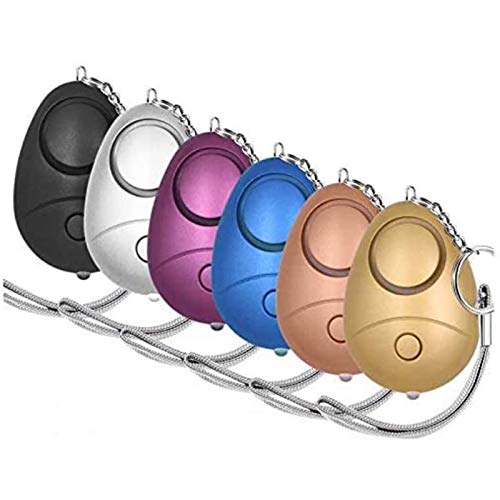
The KOSIN 6-pack is designed for multiple users, including the elderly, students, and night workers. Each unit emits a 140 dB alarm that can project sound across large distances, drawing attention during emergencies. A built-in LED light adds nighttime visibility, aiding orientation in dark settings. The device runs on three AG13/LR44 batteries, offering long life with up to a year between replacements in typical use. This multi-function alarm supports travel, walking at night, and general safety in daily routines.
SYNLETT Caregiver Pager Wireless Call Buttons

The SYNLETT system offers portability and freedom for caregivers. It includes two wireless call buttons and a portable pager, enabling residents to summon assistance while caregivers attend to other tasks. The system is versatile: belts, walls, headboards, and bedside surfaces can all accommodate the devices. A simple SOS button lets residents seek help quickly, streamlining daily care and enabling more independent living for seniors while ensuring rapid response for caregivers.
Smart Caregiver Bed Alarm with Weight-Sensing Bed Pad

This bed alarm focuses on fall prevention by monitoring pressure changes as a person leaves or re-enters the bed. The 10″ x 30″ pad sits beneath the fitted sheet for discreet monitoring. An accompanying monitor emits audible alerts for in-room responses, while an optional wireless add-on can send alerts directly to caregivers. Placement is flexible for bedrooms, nursing facilities, or home use, and easy setup minimizes disruption to routines.
Sammons Preston Magnet Alarm

The Sammons Preston magnet alarm is designed for patients in beds or wheelchairs. Its simple clip-on design uses a magnet and cord that retracts to trigger the alarm when the patient moves away. With multiple volume levels (105 dB and 90 dB) and a red indicator light for low battery, this device provides dependable alerts for caregivers while remaining compact and unobtrusive in clinical or home settings.
TECKNET Rechargeable Personal Safety Alarm

The TECKNET alarm emphasizes long standby and simple operation. It provides a 130 dB siren paired with a strobe light to deter potential threats and attract attention. A USB rechargeable battery reduces ongoing costs, offering up to 500 days of standby in some conditions and a few hours of continuous alarm use. The device supports quick activation by pulling a pin or discreet triggering via a secondary method, making it suitable for elderly users who value ease of use and reliability.
Buying Guide: What To Consider When Choosing A Personal Alarm For The Elderly
When selecting a personal alarm for an elderly loved one, it helps to balance ease of use, reliability, and the preferred method of alerting caregivers or bystanders. Consider the environment (home, assisted living, or outdoors), chronic conditions, and whether dedicated caregiver support is needed in real time. Safety alarms vary by power source, audible range, and alert delivery (in-room notification, remote pager, or automatic phone alerts).
Key Purchase Considerations
- Alert Strength and Range: For outdoor use or loud environments, a higher decibel level (100–140 dB) increases the chance that someone nearby will respond promptly.
- Power Source And Longevity: Replaceable batteries simplify maintenance; rechargeable units reduce ongoing costs but require charging routines. Consider how often replacements or recharges are feasible.
- Ease Of Activation: Pull-pin or quick button access reduces response time. Avoid complex multi-step activations that could delay help in an emergency.
- Portability And Convenience: Keys, purses, belts, or bedside placements should fit daily routines. Lightweight options with simple fastening help seniors use the device consistently.
- Discreetness And Comfort: For elders with mobility or cognitive concerns, discreet devices that don’t cause embarrassment encourage consistent use during daily activities.
- Caregiver Integration: Systems like wireless pagers or nurse-call style devices improve response times and coordination between family members and professional caregivers.
- Durability And Materials: Devices should withstand daily handling, accidental drops, and varying weather if used outside.
- Safety Features: LED lights, low-battery indicators, and low-maintenance designs help ensure readiness when needed most.
Single-Device Versus Multi-Device Setups
Single-device alarms are simple and focus on personal alerting, suitable for independent seniors or light daily activities. Multi-device sets, including bed alarms, wireless pagers, and portable keychain alarms, provide broader safety coverage, particularly for seniors with higher risk of falls or wandering. Multi-device ecosystems can reduce caregiver response times but may require additional setup and maintenance.
Environment And Daily Routine Considerations
Home safety often benefits from bed alarms and wall or belt-mounted alerts, while outdoor activities may require long-range, loud alarms with easy activation. Consider whether the senior spends time alone, the presence of caregivers, and the typical locations where alerts are needed most (bedroom, living area, yard, or outside). A mix of in-room alerts and portable devices can offer comprehensive coverage across different scenarios.
Maintenance And Longevity
Battery life is a practical concern; replaceable batteries simplify replacements, while rechargeable devices require charging. Look for clear battery indicators and durable housings. Ensure compatibility with caregivers’ workflows and communication channels to maintain rapid responses during emergencies.
Comparison Snapshot
- Best for travel and multi-user scenarios: KOSIN and Fauxomor offer high-decibel alarms with portable form factors and LED lighting.
- Best caregiver integration: SYNLETT caregiver pager provides direct alerts to a caregiver’s device, enabling hands-off monitoring.
- Best for fall prevention in bed-bound seniors: Smart Caregiver Bed Alarm detects bed exit and notifies caregivers or staff.
- Best balance of simplicity and reliability: Sammons Preston Magnet Alarm is easy to clip on and use with adjustable volume.