The right microphone can transform spoken audio for podcasts, streaming, voiceovers, and public speaking. This guide highlights five strong options for American readers, covering USB convenience, durable builds, and versatile sound reproduction. Each choice is evaluated for voice clarity, background noise rejection, and ease of use across home studios, classrooms, and on-the-go setups.
Summary table of chosen products:
| Product | Type | Key Benefit | Connection |
|---|---|---|---|
| FIFINE Studio Condenser USB Microphone Kit (T669) | Condenser USB Kit | Bright vocal detail; includes boom arm | USB |
| FIFINE USB Microphone K669B | USB Condenser | Solid all-around for vocals; volume knob | USB |
| FIFINE Dynamic Microphone K688 | Dynamic XLR/USB | Low noise; multipurpose, solid on-air sound | XLR/USB |
| Electro-Voice ND76 | Dynamic Vocal Microphone | Crisp vocal presence; stage-ready isolation | XLR |
| NEEWER NW-040 | Cardioid Dynamic | Reliable performance at budget | XLR |
FIFINE Studio Condenser USB Microphone Kit With Boom Arm
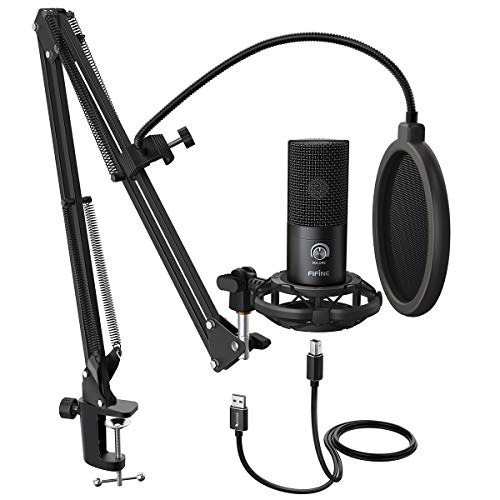
Designed for desk-based recording, this USB condenser mic kit includes a flexible boom arm, shock mount, and a long USB cable. The cardioid capsule focuses on the front while minimizing room noise, making it suitable for voiceovers, podcasts, streaming, and YouTube commentary. Its plug-and-play setup works with PCs and laptops without extra drivers, though compatibility with consoles or mobile devices is limited. The dual-layer pop filter helps reduce sibilance and breath sounds for crisper vocal tracks.
Key features emphasize ease of use and reliable vocal capture: plug-and-play USB output, solid build, and an adjustable arm for precise positioning. The included components streamline a ready-to-record workflow, lowering the barrier for beginners and hobbyists seeking professional-sounding results without complex setup.
FIFINE USB Microphone K669B
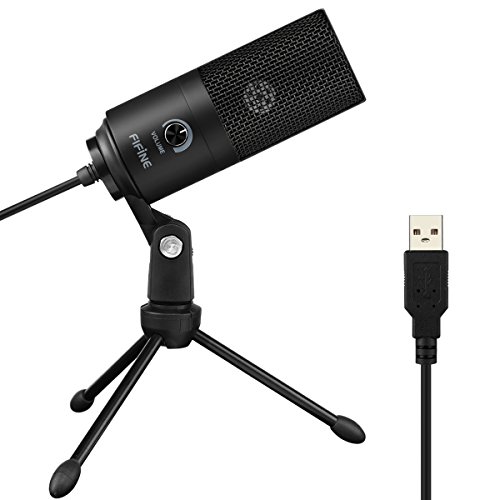
This USB condenser mic emphasizes straightforward, reliable recording for vocals, meetings, streams, and YouTube videos. Its metal construction adds durability, and a dedicated volume knob on the body enables quick adjustments during sessions. The 5.9-foot USB cable provides flexible placement options, while the plug-and-play setup keeps the focus on content creation rather than configuration. It’s not compatible with Xbox or phones, which should be considered for cross-device use.
The microphone aims to deliver a balanced, clear vocal tone with minimal noise when used in typical home-studio environments. The kit’s simplicity makes it a strong option for creators who want a clean, plug-and-play solution without sacrificing sound quality.
FIFINE Dynamic Microphone K688
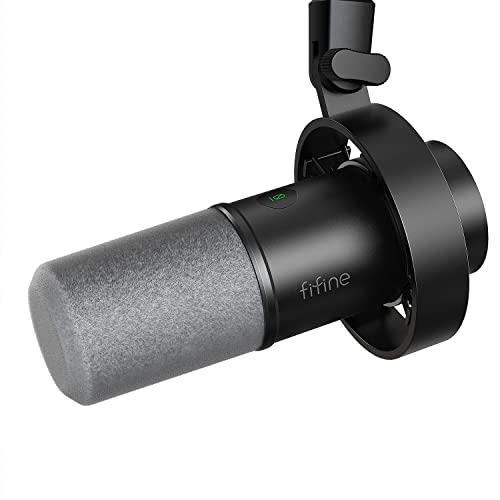
The K688 is a dynamic microphone with both XLR and USB options, making it versatile for studio recording or on-the-go setups. Its cardioid pattern reduces background noise, which is useful in less controlled spaces. The model emphasizes durability and straightforward control, including a mute feature and monitoring capabilities for real-time sound check. While it is heavier-duty than typical USB mics, it remains accessible to hobbyists seeking stronger vocal presence without excessive post-processing.
With an emphasis on natural-sounding voice capture, this mic can adapt to podcasting, voiceover work, and streaming. The USB/XLR flexibility helps it integrate with mixers or audio interfaces for more complex setups as needs evolve.
Electro-Voice ND76 Dynamic Cardioid Vocal Microphone

The ND76 is a robust vocal microphone designed to deliver crisp, balanced presence with strong isolation from ambient noise. Its dynamic design makes it well-suited for live-sounding recordings and stage performances where loud environments are a consideration. The cardioid pattern helps keep the focus on the speaker and reduce off-axis noise, aiding in clear broadcasts and voice work in less-than-studio conditions. It’s a practical choice for those prioritizing vocal intelligibility and reliability in a single-mic solution.
Even though it’s built for stage and studio use, the ND76’s straightforward XLR connection pairs well with mixers and audio interfaces for professional-grade results. It provides a classic, dependable option for voice-heavy content across a range of formats.
NEEWER NW-040 Cardioid Dynamic Microphone

The NW-040 offers a budget-friendly cardioid dynamic solution with a sturdy metal housing. Its unidirectional pickup pattern helps minimize background noise, making it a sensible option for vocal recording, instrument miking, podcasts, and streaming. While not featuring USB connectivity, it pairs well with standard audio interfaces or mixers via XLR, allowing more advanced routing and processing when needed. It’s a practical entry point for beginners and those experimenting with dynamic vocal mics without a large upfront investment.
Buying Guide: Choosing The Right Voice Microphone
Microphone selection depends on intended use, environment, and equipment ecosystem. Here are key considerations across common scenarios.
- Connection type: USB mics offer simplicity and quick setup for desktops and laptops, ideal for home studios and online content. XLR mics require audio interfaces or mixers but provide greater flexibility and upgrade paths for expanding gear.
- Sound profile: Condenser mics capture a broad, bright sound with more detail but can pick up room noise. Dynamic mics are typically less sensitive and better at rejecting background noise, making them suitable for untreated spaces and live settings.
- Directionality: Cardioid patterns prioritize the front of the mic, reducing side and rear noise. This is useful for voice work in noisy environments or shared rooms.
- Durability and build: Metal housings and sturdy stands help with long-term reliability, especially for frequent use or on the road.
- Accessories: A boom arm, shock mount, and pop filter can dramatically improve vocal clarity and reduce plosive sounds. Consider what’s included in a kit and what may need to be purchased separately.
- Compatibility: Check device compatibility with your PC, Mac, or consoles. Some USB mics are not compatible with gaming consoles or mobile devices, which can influence future needs.
- Budget vs. performance: For voice-focused content, prioritize clear vocal reproduction and noise rejection. A balanced approach often means a dynamic mic for noisy rooms or a condenser mic with proper acoustic treatment for pristine studio settings.
- Future-proofing: If you expect to upgrade to an audio interface or mixer later, an XLR-capable microphone may be a better long-term investment than a USB-only model.
This guide presents a range of options to match different environments—from compact USB setups ideal for beginners to rugged dynamic mics suited for more demanding uses. The five highlighted products provide representative choices across price points, all designed to deliver reliable voice clarity for everyday recording, streaming, teaching, and broadcasting.