Explore a curated set of home automation kits that blend beginner-friendly electronics with scalable smart home capabilities. This article highlights five top options, spanning Arduino and ESP32 ecosystems, smart plugs, energy monitoring, and farm-focused automation. Each kit offers tutorials, modular components, and varying levels of control to help you build, automate, and monitor your living space with confidence.
| Product | Brand | Key Focus |
|---|---|---|
| ELEGOO Mega R3 Project Starter Kit | ELEGOO | Arduino IDE compatibility; extensive components |
| KEYESTUDIO IOT ESP32 Smart Home Starter Kit | KEYESTUDIO | ESP32-based smart home; multiple projects; multi-language |
| Linkind Matter Smart Plug Pack | Linkind | Matter-enabled smart plug ecosystem; remote control |
| Emporia Vue 3 Home Energy Monitor | EMPORIA | Real-time energy monitoring; safety certified |
| SunFounder ESP32 Ultimate Starter Kit | SunFounder | ESP32 projects; IoT focus; multiple languages |
ELEGOO Mega R3 Project Starter Kit
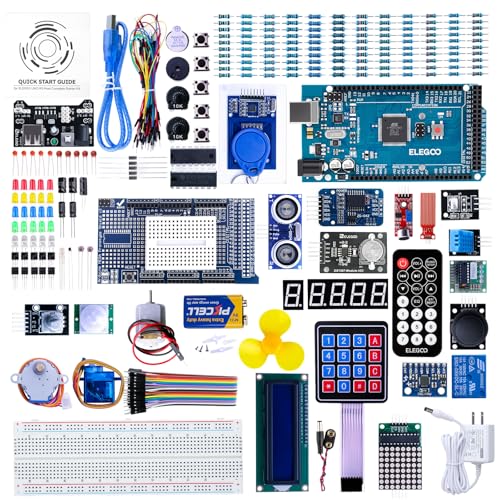
The ELEGOO Mega R3 Project Starter Kit provides a comprehensive MEGA2560-based platform with more than 200 components. It suits beginners and experienced makers who want a robust Arduino setup with a detailed tutorial library. The included LCD1602 module and GY-521 sensor header enable hands-on learning without soldering, accelerating the path from concepts to functional prototypes. The kit is designed for use with the Arduino IDE, offering broad compatibility with a wide range of shields and modules. This makes it ideal for home automation experiments, sensor networks, and automated control projects that require reliable hardware and guided learning.
Key features include: a large component assortment, a PDF tutorial with 35+ lessons, and ready-to-use modules that streamline project assembly. Users gain practical experience assembling circuits, programming microcontrollers, and integrating sensors with dashboards or microcontroller-driven automations. The broad component set supports diverse home automation experiments, from simple LED indicators to UART-enabled sensors and display interfaces. This kit is well-suited for hobbyists building out a smart home lab or classroom-style projects.
KEYESTUDIO IOT ESP32 Smart Home Starter Kit
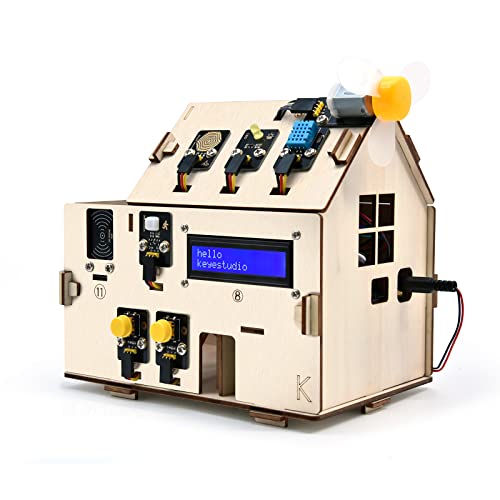
The KEYESTUDIO ESP32 Starter Kit centers on ESP32 for smart home projects, with Python and C programming options. It includes 13 guided projects to teach core modules like buttons, LEDs, and sensors, and demonstrates how a smart home can be controlled with a mobile device. The kit supports both Scratch-style and Arduino/MicroPython workflows, helping learners switch between block-based coding and text-based programming as they expand automation capabilities. The wooden house DIY enclosure adds a tangible, hands-on element to projects such as motion sensing, environment monitoring, and simple home automation routines.
Highlights include: a beginner-friendly learning path, multi-language tutorials, and a compact, extensible platform for experimenting with smart home concepts such as lighting control, climate sensing, and security-oriented alerts. The kit emphasizes practical understanding of how wireless modules, sensors, and microcontrollers collaborate to enable remote operation and automation in everyday environments.
Linkind Matter Smart Plug 4-Pack

The Linkind Matter Smart Plug supports cross-platform control with Apple Home, Alexa, Google, SmartThings, and AiDot, rooted in the Matter standard for seamless device interoperability. With 2.4 GHz Wi‑Fi, these plugs enable remote access, scheduling, and automation rules via major ecosystems, minimizing app clutter by unifying control through Matter-compatible hubs or controllers. The offline LAN capability ensures basic device coordination even during internet outages, which helps maintain reliable automation for essential devices such as lamps, space heaters, or fans.
Key considerations include: ease of setup, compatibility with major smart home ecosystems, and energy-management potential. For households seeking simple, scalable automation without complex hubs, these plugs offer a straightforward path to expand a smart home with reliable remote control and scheduled operations.
Emporia Vue 3 Home Energy Monitor

The Emporia Vue 3 Energy Monitor provides real-time electricity usage data for single-phase and multi-wire systems, with UL certification for safety. It installs in the circuit panel and uses clamp-on sensors to measure power consumption, enabling constant visibility into home energy patterns. The device supports monitoring solar production and net metering, helping users optimize energy use and integrate with broader home automation strategies. An included 1-year warranty adds a layer of assurance for long‑term monitoring and automation reliability.
Key considerations include safety certification, installation requirements, and compatibility with solar or grid-tied systems. For homeowners pursuing energy-aware automation, Vue 3 offers a solid foundation for integrating real-time consumption data with automations, dashboards, and potential demand-response routines.
SunFounder ESP32 Ultimate Starter Kit
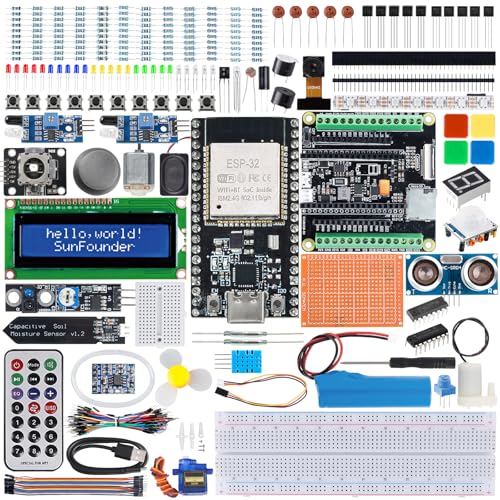
The SunFounder ESP32 Ultimate Starter Kit is designed for a broad range of learners, featuring 100+ projects and 320+ components, including a battery for mobile experimentation. It supports Python, C/C++, and Scratch, making it accessible to beginners while offering depth for more advanced users. The kit emphasizes IoT applications and home automation, with tutorials and compatibility with platforms like OpenWeatherMap, MQTT, CheerLights, and Home Assistant. A camera extension board adds multimedia capabilities, enabling projects that involve video and sensor data for smarter home dashboards.
Considerations include language flexibility, hardware breadth, and the ability to scale to full smart home setups. For those starting with ESP32 and aiming to build connected devices—from motion sensors to climate monitors—SunFounder provides a comprehensive, language-flexible pathway.
Buying Guide: Key Purchase Considerations for a Home Automation Kit
- Platform and language support: Choose kits that align with your preferred ecosystems (Arduino IDE, ESP32 with MicroPython or C/C++, Scratch compatibility) to ensure a smooth development experience and future scalability.
- Project scope and learning path: Assess whether you want beginner-friendly tutorials or advanced, expandable modules for deeper automation projects such as energy monitoring or multi-room lighting control.
- Sensor and actuator variety: Look for kits that include a mix of sensors (motion, temperature, humidity, gas) and actuators (LEDs, relays, mosfets) to enable a wide range of automation scenarios.
- Integration capability: Prioritize devices that work with major ecosystems (Apple Home, Google Home, Alexa, SmartThings) or protocol standards (Matter) for seamless interoperability.
- Safety and certification: For energy-focused kits, ensure UL or equivalent safety certifications and proper installation guidance, especially for panel-mounted monitors or high-wip components.
- Documentation and tutorials: Favor kits with comprehensive, accessible tutorials, online resources, and sample projects to support self-directed learning and troubleshooting.
- Expandability and future-proofing: Consider whether the kit can be scaled with additional modules, sensors, or third-party integrations to grow a smart home over time.
- Price-to-value balance: Compare component quality, tutorial depth, and platform flexibility to determine the best value for your goals, whether quick automation experiments or long-term home projects.
In summary, these five home automation kits offer a spectrum of entry points—from Arduino-based starter collections to ESP32-powered smart home systems, Matter-compatible plugs, and energy monitoring modules. Your choice should reflect your aims: rapid automation experiments, energy management integration, or extensive IoT projects spanning lighting, climate control, and security. Each option provides practical bridges between hands-on learning and real-world smart home capabilities, allowing you to grow from beginner projects to fully automated spaces.