Graphic card deals continue to attract PC enthusiasts who want solid performance without breaking the budget. This guide highlights five strong options that balance price, power, and features for American gamers. Each pick comes with a quick look at its strengths, ideal use cases, and key specs to help you compare quickly. Whether you’re upgrading an older system or building a compact setup, these cards cover mainstream to enthusiast performance.
Below is a summary table of the chosen products to help you scan capabilities at a glance.
| Product | Brand | Memory | Target Use | Notable Feature |
|---|---|---|---|---|
| MSI Gaming GeForce GT 1030 | MSI | 4GB DDR4 | Budget eSports, HTPC | Low profile design, DirectX 12 ready |
| ASUS Dual GeForce RTX 3050 | ASUS | 6GB GDDR6 | 1080p gaming, DLSS | Ampere architecture with DLSS support |
| ASUS The SFF-Ready GeForce RTX 5070 OC | ASUS | 12GB GDDR7 | Small form-factor builds, high refresh | Compact, DLSS 4 and DLSS tech |
| GIGABYTE RTX 5070 WINDFORCE OC SFF | GIGABYTE | 12GB GDDR7 | SFF builds, gaming at high settings | WINDFORCE cooling, PCIe 5.0 |
| ASUS RTX 5080 OC | ASUS | 16GB GDDR7 | High-end 4K/1440p gaming | Vapor chamber cooling, strong durability |
MSI Gaming GeForce GT 1030 4GB OC
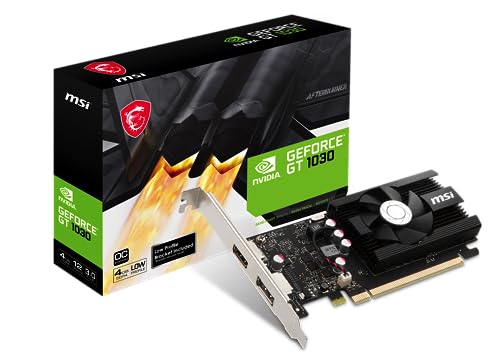
Designed for entry-level gaming and media centers, the MSI GT 1030 4GB DDR4 is a compact option with 4GB of memory. It runs DirectX 12 and offers a modest boost clock around 1430 MHz for smoother gameplay in lighter titles. Ideal for upgrading older machines that need a display upgrade without a heavy power draw or cooling footprint. The low-profile form factor helps it fit in small cases or HTPC builds while still providing modern API support.
Key considerations: limited VRAM makes it best for older or very light titles, not ideal for demanding modern games at high settings. This card excels in power-conscious setups and quiet builds.
ASUS Dual RTX 3050 OC Edition

ASUS brings the RTX 3050 with 6GB of GDDR6 memory and dual-axial cooling. The card uses NVIDIA’s Ampere architecture to deliver solid 1080p performance with DLSS and ray tracing capabilities. It’s a strong modern mid-range choice for gamers who want smooth frame rates in most titles at 1080p with some headroom for higher settings in less demanding games. The 2-slot design keeps installation flexible in many standard ATX builds.
Notable features include improved power efficiency, RT cores for ray tracing, and Tensor cores for DLSS. This card balances performance and efficiency, making it suitable for budget-conscious upgrades that still demand current features.
ASUS The SFF-Ready RTX 5070 OC

Powered by the NVIDIA Blackwell architecture and DLSS 4, this 12GB GDDR7 card is designed for small-form-factor builds without sacrificing performance. The SFF-Ready design means it fits compact chassis while delivering high-end gaming capabilities. Axial-tech fans and a barrier ring optimize airflow and cooling, helping maintain stable performance in longer sessions. It’s a compelling option for users upgrading compact rigs or living-room PCs requiring robust graphics.
Performance notes: DLSS 4 and advanced AI features provide enhancements in supported titles, while the 12GB memory ensures headroom for texture-heavy games at higher resolutions.
GIGABYTE RTX 5070 WINDFORCE OC SFF 12G

GIGABYTE combines RTX 5070 power with a WINDFORCE cooling system in a compact form factor. The 12GB GDDR7 memory and PCIe 5.0 support provide ample bandwidth for modern titles at high settings. This card is well-suited for small builds that still demand premium performance, including higher frame rates and consistent cooling under load. The wind-swept fan design reduces thermal throttle, helping maintain peak clocks longer.
Considerations: ensure your power supply and case airflow can support a high-end card, as thermals and power draw are higher than entry-level options.
ASUS RTX 5080 OC

The RTX 5080 OC rounds out this list with 16GB of GDDR7 and PCIe 5.0 support. Built for top-tier gaming at 1440p and even 4K in select titles, this card emphasizes raw performance. Features like a vapor chamber cooling system and protective PCB coating contribute to reliability under sustained loads. It’s a choice for enthusiasts who want high frame rates, the latest RT/dlss features, and long-term durability.
Key considerations: higher power requirements and larger dimensions may constrain smaller builds. Confirm your case size, PSU capacity, and cooling strategy before choosing this card.
Buying Guide: Key Purchase Considerations
When evaluating graphics card deals, several factors influence value and future-proofing. This guide outlines important dimensions to consider and how they apply across the five picks above.
- Performance target: Define your gaming goals (1080p, 1440p, or 4K). Cards like the RTX 3050 are solid for 1080p with DLSS, while the RTX 5080 targets higher resolutions with higher settings.
- Memory size and type: GDDR6 and GDDR7 memory determine texture handling and bandwidth. More memory helps with modern titles at higher quality settings, but memory type and speed also matter for sustained performance.
- Architecture and AI features: Ampere and Blackwell architectures bring ray tracing, DLSS, and AI-driven upscaling. DLSS enables smoother frame rates without sacrificing image quality in supported games.
- Form factor and cooling: Small form-factor (SFF) cards excel in compact builds but may require careful airflow planning. Larger cards with robust cooling can maintain higher clocks for longer sessions.
- Power requirements: Check PSU wattage and connectors. High-end cards may need additional PCIe power connectors and adequate headroom to avoid throttling.
- Platform compatibility: PCIe version, motherboard clearance, and case space influence whether you can install a particular model in a given build.
- Future-proofing: A 12GB or 16GB memory configuration supports more demanding textures and multi-monitor setups, contributing to longer useful life of the card.
Comparison at a glance: For budget-conscious upgrades in 1080p, the RTX 3050 and GT 1030 options provide modern features with modest power needs. For compact builds requiring higher performance, the 12GB RTX 5070 variants excel with DLSS 4 and efficient cooling. The RTX 5080 OC is best for enthusiasts chasing top-tier visuals and future-proofing, albeit with higher requirements for power and space.