Gimbal stabilizers are essential for capturing professional-looking video and sharp stills with DSLR and mirrorless cameras. This guide highlights five top gimbals, covering built-in AI tracking, native vertical shooting, payload capacity, and ease of use. Each model listed here is compatible with a wide range of brands and offers features designed to elevate dynamic shooting across genres like wildlife, sports, and travel.
Summary of selected products:
| Product | Brand | Key Feature | Approximate Capacity |
|---|---|---|---|
| FeiyuTech SCORP 2 Gimbal Stabilizer | FeiyuTech | AI Tracking, Vertical Filming | 2.5 kg |
| NEEWER GM101 Gimbal Tripod Head | NEEWER | 360° Pan, Heavy Load | 30 lb / 13.6 kg |
| ZHIYUN CINEPEER Weebill 3E | ZHIYUN | 3-Axis, Native Vertical, Blue tooth control | 3 kg |
| DJI RS 4 | DJI | 2nd-Gen Native Vertical, Mode Switch, Teflon Arms | 2 kg |
| DJI RS 4 Pro | DJI | 4.5 kg Payload, Increased Torque, Remote Focus/Zoom | 4.5 kg |
FeiyuTech SCORP 2 Gimbal Stabilizer

The FeiyuTech SCORP 2 is a three-axis gimbal designed for DSLR and mirrorless cameras, supporting a payload up to 2.5 kg. It includes an integrated AI tracking sensor to follow subjects with simple gestures, reducing the need for extra accessories. A quick vertical filming setup lets users switch to portrait orientation rapidly, ideal for social media workflows. Connectivity options include both wired control via a camera cable and wireless Bluetooth control for focus and shutter operations, enabling responsive shooting across scenes.
NEEWER Gimbal Tripod Head GM101
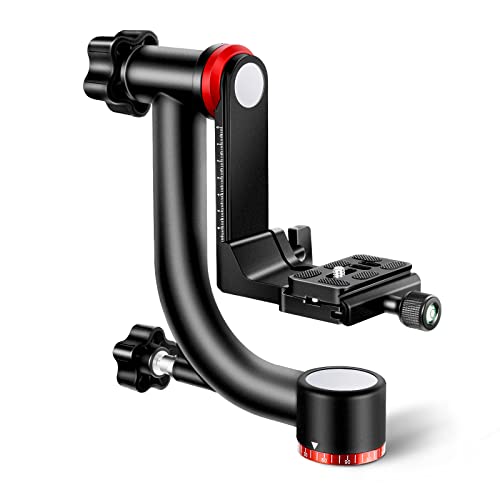
The NEEWER GM101 is a heavy-duty aluminum gimbal tripod head with a 13.6 kg (30 lb) load capacity. It provides smooth camera movement on both vertical and horizontal axes with a robust bearing structure, delivering stable panning and tilting. The 360° panning base allows precise framing for panoramas, while standard 1/4″ and 3/8″ sockets enable straightforward mounting on most tripods. This unit is built for wildlife and sports photography where stability and precise control matter most.
ZHIYUN CINEPEER Weebill 3E

The Weebill 3E is a slim, lightweight three-axis gimbal with a 3 kg payload and native vertical shooting capability. Its compact form reduces fatigue during longer shoots, and the vertical shooting feature is accessible through the vertical arm without extra adapters. Note that certain camera models may require additional control cables for full compatibility; verify your camera model before purchasing to ensure seamless connections and control capabilities.
Aluminum Alloy Gimbal Tripod Head (OPPSELVE)

This rugged gimbal head, built from aluminum alloy, supports heavier setups with a stated load capacity up to 20 kg (44 lbs). It offers a 360° panorama and a 360° rotating base to accommodate versatile angles. A standard 1/4″ quick-release plate and bubble level simplify on-site setup, while anti-slip features improve handling during field use.
DJI RS 4

The DJI RS 4 introduces a second-generation vertical shooting option with a new horizontal plate for easy vertical transitions. It features a joystick-mode switch for fast changes between PF, PTF, and FPV modes, enabling precise framing and movement control. The Teflon-coated axis arms reduce friction, promoting smoother balancing across all three axes. This model is well-suited for photographers seeking versatile, software-integrated gimbal control with reliable performance.
DJI RS 4 Pro

The RS 4 Pro provides a higher payload capacity of 4.5 kg (10 lbs) with increased motor torque via carbon fiber axis arms, enabling support for broader camera and lens combinations. It includes remote dual focus and zoom motor control, along with a joystick mode switch for quick switching between movement and lens control. This model is designed for professional setups requiring higher stability and more advanced control options in demanding production environments.
Buying Guide: Key Purchase Considerations
- Payload capacity: Ensure the gimbal can comfortably handle your camera body and lenses with some headroom for balance and future upgrades.
- Vertical shooting: Native vertical shooting reduces the need for adapters and speeds up content creation for social media and vertical formats.
- Tracking and control: Built-in AI or object-tracking features can simplify work in dynamic environments, but consider whether you also need Bluetooth or wired control for focusing and shutter control.
- Weight and ergonomics: Lighter rigs reduce fatigue, but heavier setups often offer better stability—balance your needs with shooting duration and portability.
- Compatibility: Check camera brands and lens compatibility, and confirm whether extra control cables are required for your camera model to access all features.
- Accessories and support: Look for quick-release systems, upright mounting options, and whether the gimbal includes or supports additional accessories like microphones or monitors for on-site shoots.
- Maintenance and warranty: Consider service options and firmware updates, which can extend the life of your stabilizer and improve performance over time.
When choosing among these options, prioritize your typical shooting scenarios—whether you need fast vertical transitions for social media, high payloads for cinema-style rigs, or advanced tracking features for wildlife and action videography. Each model listed provides a balance of stability, ease-of-use, and versatility to support professional DSLR and mirrorless workflows.