Consumers looking to improve over-the-air television reception can rely on digital TV signal boosters to reduce pixelation and dropouts. This guide highlights top indoor and distribution boosters that work with 4K/1080p HDTVs, supporting VHF/UHF signals and minimizing interference from nearby networks. The selections below emphasize low-noise performance, LTE filtering, and adjustable gain to adapt to different setups and home layouts. Use this overview to identify boosters that align with your antenna type, signal strength, and viewing goals.
| Product | Brand | Key Benefit |
|---|---|---|
| GE Indoor HD Digital TV Antenna Amplifier | GE | Low noise, 4G/5G LTE filter |
| The CIMPLE CO Antenna Amplifier Kit | THE CIMPLE CO | Up to 24 dB gain, clear output |
| TV Antenna Amplifier Signal Booster (White) | GZMJRD | Super signal boost with LTE filter |
| TV Antenna Amplifier Signal Booster (Black) | GZMJRD | High gain, USB powered option |
| Channel Master TV Antenna PreAmp | Channel Master | LTE filter, indoor/outdoor versatility |
GE Indoor Amplifier With Low Noise Booster
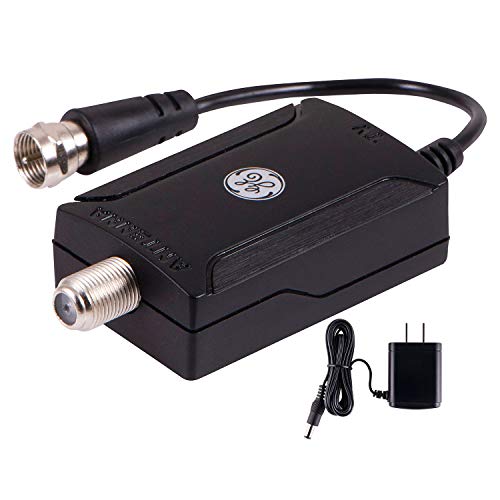
GE’s indoor amplifier is designed for broad compatibility across TV brands and antennas, delivering 1080p and 4K Ultra HD readiness. The built-in PureAmp technology adds a 4G/5G LTE filter to block cell interference, improving reception for HDTV, VHF, and UHF channels. As a low-noise signal booster, it compensates for cable loss and reduces reception dropouts, though results depend on antenna placement, distance from towers, and surrounding obstacles. This model suits urban apartments and small homes where interference from wireless devices is common.
Key factors include: universal compatibility with different antennas and devices, the need for a corded power source, and its ability to minimize pixelation without requiring complex installation. The booster’s performance will vary with channel distance and environmental factors, so users should experiment with antenna angle and height to maximize gains.
THE CIMPLE CO Antenna Amplifier Kit
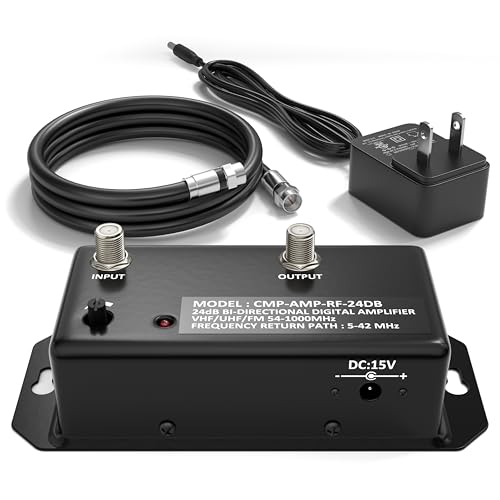
This kit includes a 1 TV antenna amplifier and RG6 coaxial cable, offering adjustable gain up to 24 dB for strong signal distribution. It’s designed for indoor use and works with VHF/UHF/FM bands, ATSC, NTSC, FTA, and OTA signals. The device focuses on boosting existing strong signals with minimal distortion, making it ideal for setups where a single antenna feeds multiple TVs. Prospective buyers should verify tower proximity and antenna size to ensure compatibility with their viewing area.
Considerations include the amplification limit (it cannot compensate for poor antenna location or severe obstructions) and the need to place the amplifier between the antenna and TV or STB. The kit’s simplicity appeals to DIY installers who want a straightforward upgrade without external power requirements.
GZMJRD Indoor Amplifier With Adjustable Gain

The GZMJRD model emphasizes 2026 upgrades, including a 4G/5G LTE filter to cut interference and clear up low-strength channels. It cautions users to assess regional signal strength before boosting, as overly strong green-channel environments may not require amplification. Installation is simple: place the booster between the antenna and the TV or set-top box. The device is compatible with most antennas and emphasizes practical results tied to the user’s location relative to broadcast towers.
From a performance perspective, this amplifier targets pixelation reduction and reliable reception for local broadcasts. The USB-powered variant introduces flexibility for living rooms, bedrooms, and dorm setups where power outlets are conveniently located. Like all boosters, optimal results come from appropriate placement and matching antenna size to the local signal landscape.
GZMJRD White 25dB Antenna Booster
This white 25dB booster is designed to be compatible with all antennas and emphasizes its 4G/5G LTE filter. The product highlights ease of installation, stating that the booster should be placed between the antenna and the TV or STB box. It also notes that the number of channels depends on distance from the broadcast tower, channel availability, and other environmental factors. The emphasis is on a straightforward upgrade path for改善 reception in a variety of living spaces.
Users should weigh whether their area needs a booster at all, guided by the balance of green versus yellow/orange channels. As with similar devices, this booster’s effectiveness hinges on appropriate antenna quality and installation, not solely on the amplifier, ensuring practical, predictable improvements where feasible.
Channel Master PreAmp With LTE Filter

Channel Master’s preamp is designed for weak-signal areas, compatible with both indoor and outdoor passive antennas. It features a built-in LTE filter to block 3G/4G/5G interference and EMI/FM outside-band signals, improving signal strength and overall quality. The amplifier is positioned as a higher-power option than typical distribution devices, suitable for long coax runs and whole-home distribution when paired with compatible splitters. It is not ideal for antennas with built-in amplification or those originally sold with one, ensuring users choose the right configuration.
Key considerations include placement, potential need to move an attic antenna outdoors for best results, and the understanding that signal meters may not accurately reflect RF improvements. The preamp’s versatility supports both single-TV and multi-TV installations, offering stronger gains where the physical setup allows for it.
Buying Guide: Key Purchase Considerations And Comparisons
- Signal strength and distance: The need for a booster depends on proximity to broadcast towers and the presence of obstructions. In areas with many green channels, a boost may be unnecessary; in areas with weaker signals, a booster can improve reception.
- LTE interference filtering: LTE filters reduce interference from 4G/5G networks, reducing pixelation and channel loss. Choose models with built-in LTE filtering for best stability in dense neighborhoods.
- Gain and distribution: Adjustable gain (up to 24 dB or more) helps tailor amplification to the setup. Consider whether you need a single-TV booster or a distribution amp for multiple TVs.
- Indoor vs. outdoor suitability: Most listed boosters are designed for indoor use, with some models offering compatibility for outdoor or attic installations. Outdoor-ready units may offer greater stability but require weatherproofing and precise placement.
- Power requirements: Some boosters require a constant power source via a wall outlet or USB. Assess power accessibility in the intended installation area to avoid cluttered cords.
- Compatibility: Ensure the booster works with your current antenna type (indoor, outdoor, omni, high-gain) and your TV or STB. Avoid models that conflict with built-in amplifiers in newer antennas.
- Installation complexity: Most options offer straightforward, plug-and-play installation, while others may require more careful placement and testing to achieve optimal reception.
- Channel variability: Real-world results depend on local broadcasting environment. Test at multiple times and adjust antenna position to maximize channel count and signal quality.
- Quality and reliability: Prefer models with LTE filtering and low-noise designs to ensure stable reception across channels, especially in urban settings with many wireless devices.
- Safety and compliance: Use equipment designed for consumer TV reception and follow manufacturer guidelines to avoid interfering with other devices or violating local regulations.