For hobbyists and researchers evaluating plant trichomes, a reliable digital microscope helps reveal minute details like glandular content, hair-like structures, and surface texture. The following selections emphasize portability, image clarity, and practical features such as LED lighting and reliable connectivity. Each option is suitable for observing trichomes on leaves, stems, and buds, whether you’re in a classroom, greenhouse, or home lab.
Selected Products — a quick reference to the five cameras below. The table highlights the brand, model, and connectivity to help you compare at a glance.
| Product | Brand | Connectivity | Key Trait |
|---|---|---|---|
| Wireless Digital Microscope, Skybasic 50X-1000X | SKYBASIC | WiFi / USB | Smartphone friendly, adjustable stand |
| IWOBAC Digital Microscope Wireless Pocket | IWOBAC | WiFi / USB | 8 LEDs, broad compatibility |
| TOMLOV P10 Microscope | TOMLOV | LCD Screen, USB | 2″ LCD, easy sharing |
| T TAKMLY Wireless Digital Microscope | T TAKMLY | WiFi / USB | 50x-1000x, included stand |
| KEEMIKA USB Digital Microscope | KEEMIKA | USB | 50x-1600x, portable |
Skybasic Wireless Digital Microscope

The SKYBASIC wireless digital microscope gives 50x to 1000x magnification with a 2MP CMOS sensor and 1080p image capture. It supports connection to Android and iOS devices via a WiFi hotspot, or to Windows and Mac via USB. Eight LEDs provide adjustable illumination, which is useful for highlighting trichome heads and surface texture on leaves. The device includes a stand for stable imaging, aiding repeatable shots of plant surfaces.
IWOBAC Digital Microscope
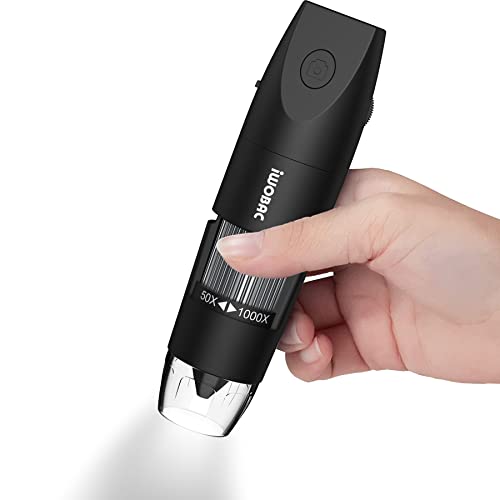
The IWOBAC model targets family-friendly exploration with 50x-1000x magnification, eight dimmable LEDs, and dual connectivity via WiFi and USB. It notes practical use cases such as examining plant trichomes, skin, hair, and other small textures. It supports major mobile and computer platforms (Android, iOS, Windows, Mac OS) and provides a compact, handheld form factor suitable for quick field checks of leaf surfaces and bud trichomes.
TOMLOV P10 Microscope

The TOMLOV P10 features a built-in 2″ LCD screen for direct viewing and easy sharing of high-resolution images. With fixed 100x magnification, it is convenient for quick checks of trichome density and morphology on plants. Its lightweight design suits hobbyists who want a pocketable tool without requiring a laptop. It emphasizes simplicity and portability, making it a practical choice for garden beds and home labs examining small plant features.
TAKMLY Wireless Digital Microscope
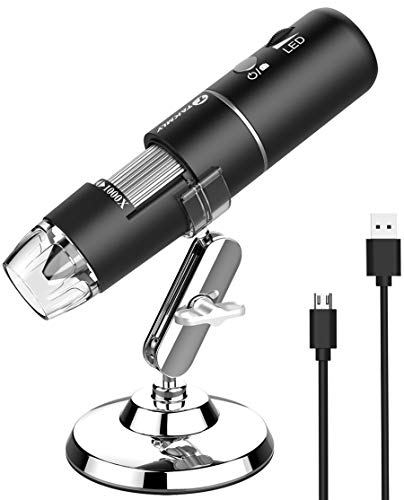
The TAKMLY wireless model combines 50x-1000x magnification with a stand for stable, repeatable measurements. It supports iPhone, Android, and PC connections via WiFi or USB, with LED illumination to enhance surface details of trichomes. The device aims for an all-in-one observation tool suitable for on-the-go checks of plant surfaces without requiring a dedicated microscope room.
KEEMIKA USB Digital Microscope

The KEEMIKA USB model offers 50x-1600x magnification with 8 LEDs for consistent lighting. It is designed to plug directly into iOS or Android devices via USB-C and supports observation of plant-related features, including trichomes, with 1920x1440P image capture. Its portable design makes it suitable for quick leaf inspections in the field or at the workbench.
Buying Guide
- Magnification range: For trichome analysis, a range like 50x-1000x or 50x-1600x is commonly sufficient to observe resin glands and surface structures. Consider models offering fixed 100x for simple tasks or higher ranges for detailed study.
- Image quality and sensor: A 2MP or higher sensor with 1080p or 4K-like output improves detail visibility. Look for models that support still images and video with good color fidelity.
- Lighting: Adjustable LEDs (8 or more) help reveal glandular structures under varied leaf textures. Uniform lighting reduces glare on shiny surfaces.
- Connectivity: If you prefer a phone-based workflow, WiFi-enabled units are convenient. USB-C and USB-A compatibility matters if you also want to connect to a PC or Mac.
- Screen vs. external device: Models with built-in LCD screens offer immediate viewing, while others rely on a connected phone or PC. Built-in screens simplify field use, but external devices can offer larger viewing areas.
- Portability and stand: A lightweight handheld with a stable stand helps maintain distance and focus, crucial for consistent trichome imaging on leaves and buds.
- Software and compatibility: Check supported operating systems (iOS, Android, Windows, macOS) and any required apps. Some devices include companion software; others rely on generic photo/video capture.
- Durability and age range: While some models target kids and beginners, professional precision might require higher-end units. Consider the intended user and environment when choosing.
Comparison Considerations
- Best for field use: Models with WiFi and a compact build (like Skybasic and TAKMLY) excel for on-site leaf checks and quick trichome assessments.
- Best for classrooms or families: Simpler interfaces with built-in screens (TOMLOV P10) reduce setup complexity and enable group demonstrations.
- Best for professional hobbyists: Higher magnification and robust lighting (KEEMIKA, IWOBAC) provide greater detail for subtle trichome variation on different plant species.