Choosing the right condenser microphone can elevate voice over work, whether you’re recording scripts, guiding tutorials, or producing podcasts. This guide highlights five compelling options that balance ease of use, sound quality, and value. From versatile USB mics for quick setups to studio-grade XLR kits for expanding future needs, these picks cover a range of setups and environments.
Summary of selected products:
| Product | Brand | Connection | Notes |
|---|---|---|---|
| FIFINE Studio USB Microphone Kit (T669) | FIFINE | USB | Boom arm, pop filter, USB cable |
| FIFINE USB Podcast Microphone (K669W) | FIFINE | USB | Volume knob, plug-and-play |
| MAONO PM320S XLR Condenser Mic | MAONO | XLR | Phantom power capable, shock mount included |
| Logitech Blue Yeti USB Microphone | Logitech for Creators | USB | Multiple pattern modes, real-time monitoring |
| PROAR XLR Podcast Microphone | PROAR | XLR | Cardioid, needs external power |
These selections balance direct USB simplicity with the flexibility of XLR setups, ensuring you can choose based on your workflow, room acoustics, and future expansion plans.
FIFINE Studio USB Microphone Kit (T669)
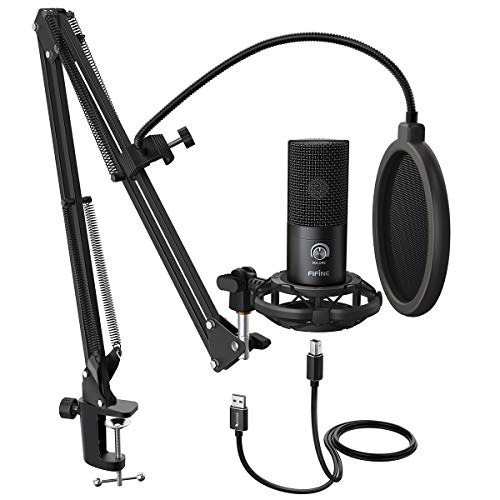
The FIFINE T669 is a comprehensive USB condenser microphone kit designed for voice work, podcasts, and streaming. It ships with a desktop boom arm, a shock mount, a dual-layer pop filter, and an 8.2-foot USB cable for flexible desk arrangements. The cardioid capsule focuses on front-facing sound while minimizing room noise, making it suitable for home studios and small studios. The plug-and-play USB connection eases setup for PC or laptop users, avoiding driver hassles.
Key features include direct USB output for quick recording, rugged construction for durability, and a flexible arm with wide rotation. The included pop filter helps reduce plosives and air bursts during fast speech, making it a practical option for voice-overs, podcasts, and YouTube narrations. The kit’s overall balance of ease of use and quality makes it a solid entry point for beginners and a reliable secondary mic for seasoned creators.
FIFINE USB Podcast Microphone (K669W)
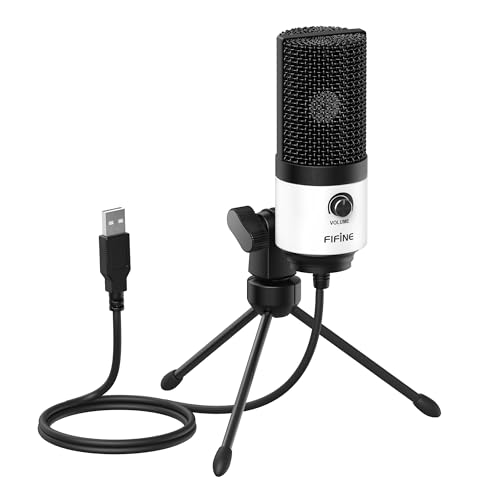
The FIFINE K669W USB microphone emphasizes straightforward setup and clear voice capture. It ships with a USB connection, eliminating audio interfaces or drivers for most systems, which supports quick recording sessions and streaming. A front-facing cardioid pattern helps isolate the voice from surrounding noise, making it suitable for home studios, online meetings, and voice-over work where simplicity matters. The built-in volume knob adds convenient on-device control, aiding in rapid adjustments without leaving the recording software.
Users benefit from a focus on voice clarity and a compact, desktop-friendly footprint. This option is ideal for beginners, students, or professionals seeking a dependable USB mic that integrates smoothly into existing computer workflows. The K669W’s straightforward control layout makes it easy to dial in consistent voice levels across sessions.
MAONO PM320S XLR Condenser Microphone

The MAONO PM320S is a professional XLR condenser microphone featuring a large 16 mm condenser capsule and a cardioid pickup pattern. It’s designed for studio-grade recording, including podcasts, streaming, vocals, and voice-overs. The PM320S benefits from a broad frequency response and high-SPL handling, enabling detailed capture of vocal nuances. It requires 48V phantom power, necessitating an audio interface or mixer for operation, which provides flexibility for evolving studio setups.
The package includes a shock mount, offering noise isolation from desk vibrations, and a wind/pop management approach for cleaner vocal tracks. This mic is suited for users who plan to grow into a more advanced, hands-on studio environment where external preamps and audio interfaces become part of the workflow.
Logitech for Creators Blue Yeti USB Microphone

The Blue Yeti is a versatile USB microphone designed for multi-pattern recording modes, including cardioid, bidirectional, and omnidirectional, making it adaptable for voice overs, podcasts, and interviews. It provides studio controls for headphone volume, pattern selection, mute, and gain, giving precise command over the recording process. A 3.5 mm headphone jack enables real-time monitoring without latency, which is valuable for voice work and on-air production.
Its ergonomic design and broad compatibility with PC and Mac systems make it a popular choice for creators who need a turn-key solution with flexible recording options. While slightly larger than compact USB mics, the Yeti’s integrated features and robust performance support consistent, broadcast-ready voice capture across a range of tasks.
PROAR XLR Condenser Microphone Kit

The PROAR XLR condenser microphone emphasizes professional sound quality through a 14 mm diaphragm and a dedicated cardioid pattern for focused voice capture. It requires 48V phantom power and an external audio interface, offering a solid upgrade path for users who intend to work with more complex recording chains, including preamps and mixers. The included kit components aim to reduce noise from vibrations and airflow, improving the overall clarity of voice recordings for podcasts, streaming, and voice-overs.
Prospective buyers should consider their need for external power and interface hardware, as well as their room acoustics. The PROAR setup is well-suited for users who want a versatile XLR mic capable of delivering high-fidelity voice with room for future expansion into more advanced studio configurations.
Buying Guide: Key Purchase Considerations for Voice Over Mics
- Connection type: USB mics offer plug-and-play simplicity for quick setups, while XLR mics require audio interfaces or mixers but deliver greater future flexibility and potential fidelity.
- Polar pattern: Cardioid mics focus on sound from the front and reduce side/ rear noise, which is ideal for broadcasting and voice work in typical home studios.
- Phantom power: XLR mics often require 48V phantom power. Ensure you have an audio interface or mixer that can supply it if choosing an XLR model.
- Included accessories: Boom arms, shock mounts, pop filters, and cables can significantly improve setup ease and recording quality; review what’s included in bundles.
- Room acoustics: If your space has a lot of echo, consider a mic with good proximity effect control and a pop filter to minimize plosives, especially for narration and voice-overs.
- Monitoring options: Real-time monitoring with headphones helps ensure consistent levels and reduces latency-related issues during voice work.
- Durability and build quality: Look for sturdy stands and metal construction if the mic will see frequent use or travel challenges.
- Upgrade path: If you anticipate growing your studio, an XLR setup with an audio interface provides a scalable route to higher-quality recordings.
- Driver and compatibility: USB mics typically work with most modern computers without driver installs, but verify compatibility with your operating system and recording software.
Choosing the right condenser microphone for voice overs depends on your current workflow, room conditions, and whether you prioritize ease of use or long-term scalability. The options listed offer a spectrum of capabilities—from ready-to-record USB kits to expandable XLR systems—so you can align your pick with your production needs and budget.