For makers, educators, and hobbyists seeking reliable first-layer results, auto leveling 3D printers simplify setup and ensure consistent prints. This guide highlights five well-rounded models with automatic bed leveling and solid performance, spanning compact beginner-friendly machines to high-speed, multi-color systems. Each entry centers on ease of use, print quality, and ongoing reliability, so you can pick a model that fits your workspace and projects.
| Product | Brand | Build Volume | Key Benefit |
|---|---|---|---|
| Upgraded Tina2S 3D Printer | HEPHI3D | ~120x120x120 mm | Quiet operation with cloud printing |
| FLASHFORGE Adventurer 5M | FLASHFORGE | 220x220x220 mm | One-Click Auto Leveling |
| FLASHFORGE AD5X Multi-Color | FLASHFORGE | 220x220x220 mm | 1-Click Auto Leveling; multi-color |
| Bambu Lab A1 Mini Combo | BAMBULAB | ~180x180x180 mm | Full auto calibration; quiet |
| Creality K1 SE | Creality | 250x220x220 mm | Fully assembled; auto leveling |
Upgraded Tina2S 3D Printer by HEPHI3D

The Tina2S from HEPHI3D is a compact, fully assembled 3D printer designed for beginners and schools. It features a self-developed cloud-based app, enabling wireless printing through Poloprint Cloud with a large model library. Users can slice models online from a smartphone or tablet and send prints over WiFi, reducing on-device setup. The Tina2S supports open-source workflows, including Cura, PrusaSlicer, and other editing tools, with USB transfer as a fallback. The printer emphasizes quiet operation and a claimed print speed boost, making it suitable for classroom demos or quiet home use. Battery-conscious or space-limited environments benefit from its small footprint and integrated software options.
Key considerations: open-source compatibility, cloud printing convenience, and silent operation. While the built-in app simplifies initial use, more advanced users may customize settings via standard slicers. The provided features suggest a focus on beginner-friendly workflows and remote access.
FLASHFORGE Adventurer 5M Auto Leveling Printer

The Adventurer 5M from FLASHFORGE brings one-click automatic bed leveling and high-speed coreXY motion to a compact build area. With a direct extruder capable of up to 280°C, it supports a range of filaments and rapid first layers. The design emphasizes user-friendly operation, quick nozzle swaps, and a dual-sided PEI platform for easier print removal. Speed-focused features include a claimed 600 mm/s travel speed and a rapid warm-up, making it suitable for rapid prototyping, classroom demonstrations, and small team projects. The all-metal frame aids durability in busy makerspaces.
Officials or educators will appreciate the simple calibration process. For newcomers, the auto-leveling feature reduces setup friction, while more experienced users can still adjust advanced parameters. Overall, a balanced option for those seeking automatic leveling on a dependable, mainstream platform.
FLASHFORGE AD5X Multi-Color Auto Leveling Printer

The AD5X with multi-color capability supports up to four colors simultaneously, broadening creative possibilities for models, signage, and artistic pieces. Its one-click auto-leveling ensures consistent first layers across all colors, while a CoreXY architecture provides stable, high-speed printing. The printer targets workflows that require vibrant, multi-material outputs and reliable first-layer adhesion, making it well-suited for design studios and classrooms exploring color-mixing concepts. The kit includes a robust build and an emphasis on user-friendly maintenance for busy environments.
Bambu Lab A1 Mini Combo

The Bambu Lab A1 Mini Combo pairs a compact maker footprint with strong performance in speed and precision. It features full-auto calibration and a quiet operation profile, aided by active flow-rate compensation for stable extrusion. The AMS lite-enabled multi-color/multi-material workflow expands creative potential, although AMS integration may require pairing with the optional accessory. Acceleration is high, enabling fast prototyping, while the enclosed design helps maintain print quality with diverse filaments. This model targets users who want a turnkey experience with quality prints and minimal manual setup.
Creality K1 SE Auto Leveling Printer

The Creality K1 SE emphasizes beginner-friendly use with automatic calibration integrated into a Core XY, all-metal chassis. The enclosed design helps stabilize prints, especially with high-speed settings. A claimed 600 mm/s travel speed and 20000 mm/s² acceleration deliver quick print cycles while maintaining quality. The nozzle design supports rapid swapping and heat management for reliable first layers. This model suits homes and classrooms seeking a straightforward, fast-starting machine with minimal leveling effort.
FLASHFORGE AD5M Auto Calibration Printer

The AD5M combines auto-calibration with a robust all-metal CoreXY structure for high-speed, precise printing. Its one-click leveling system measures nozzle-to-build-plate distance to set offsets automatically, reducing setup time and manual tweaking. The design emphasizes reliability and ease of maintenance, with a focus on stable high-speed operation. The printer is appropriate for both education environments and professionals requiring repeatable results across multiple print runs, especially when pursuing consistent layer adhesion at speed.
Bambu Lab P1S Combo
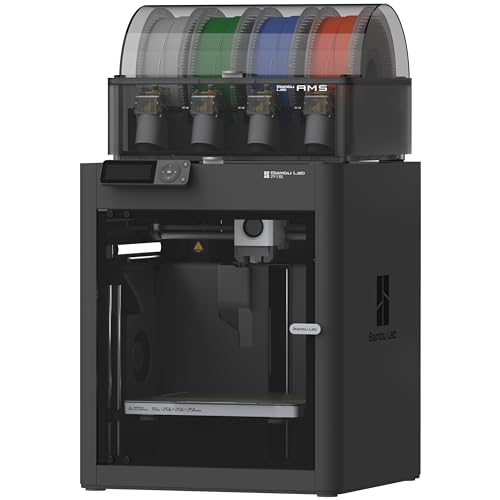
The Bambu Lab P1S Combo combines a fast printing core with auto bed leveling and multi-color capabilities via AMS. It targets users who want high throughput and color versatility within a single system. Maximum color and material flexibility is supported through compatible AMS accessories, while auto-calibration reduces setup time and improves first-layer consistency. The enclosed frame and streamlined software provide a professional-grade experience for makers, designers, and educators seeking dependable, high-quality results with minimal manual intervention.
Buying Guide: Key Considerations For Auto Leveling 3D Printers
- Auto bed leveling accuracy: Look for printers that use sensor-based bed leveling or mesh probing to ensure reliable first layers across different materials and temperatures.
- Printing speed vs. precision: CoreXY designs often emphasize speed; consider your project needs and whether you value rapid prototyping or ultra-fine detail.
- Enclosure and noise: Enclosed frames reduce drafts and improve print quality with sensitive filaments; noise levels matter for classrooms and shared spaces.
- Filament handling: Multi-color and multi-material capabilities require reliable filament feeds and potential accessory compatibility (AMS, IFS, or direct-drive options).
- Software ecosystem: Open-source slicers (Cura, PrusaSlicer, etc.) offer flexibility, while cloud or mobile printing can simplify classroom workflows.
- Build volume and footprint: Align the printer size with your workspace and the typical size of your projects.
- Maintenance and support: Look for manufacturers with active communities, regular firmware updates, and accessible spare parts.
In choosing among these options, consider whether you prioritize ultra-fast printing for prototypes, multi-color capability for visual design work, or a compact form factor for limited spaces. All listed models provide auto-leveling features that reduce manual calibration, but the quality of first layers, firmware stability, and ecosystem support will largely determine long-term satisfaction for home use or educational settings.