Choosing a telescope that excels at both visual observing and astrophotography can be challenging. This guide highlights five top options optimized for sharp imaging, wide views, and reliable performance. Each model includes key features to help you compare ease of use, aperture, focal length, and imaging capabilities. Whether you’re chasing planetary detail or deep-sky targets, these picks balance practicality with performance for amateur astronomers in the United States.
Summary Table
| Product | Aperture / Focal | Type | |
|---|---|---|---|
| SVBONY SV503 Refractor | 70mm / F6.78 | Refractor OTA | Visual astronomy and wide-field imaging |
| Fashionari Smart Telescope | 80mm / F8.89 | Digital refractor with dual screens | Beginner-friendly visual and 4K imaging |
| SVBONY SV48P | 90mm / F5.5 | Refractor OTA | Deep-sky viewing and beginner photography |
| SVBONY MK127 | 127mm / f/11.8 | Maksutov-Cassegrain | Planetary detail and deep-sky imaging |
| SVBONY SV105 Camera | 1.25″ compatibility | Astrophotography camera | Beginner lunar/planetary imaging |
SVBONY SV503 Refractor: Flat-Field Imaging
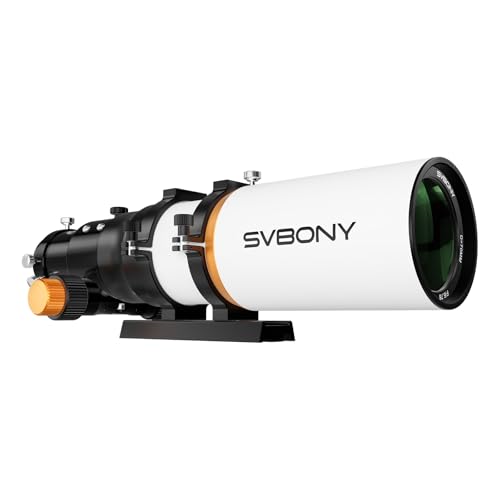
The SVBONY SV503 is a compact, flat-field refractor designed to minimize edge distortion. Its built-in field flattener reduces field curvature, delivering a wide, undistorted view ideal for astrophotography and visual use. With a bright 70mm aperture and a focal ratio of F6.78, this OTA provides sharp, true-to-life colors. The dedicated flat-field design helps observers connect directly to imaging gear, enabling quicker, more consistent focus and shooting setups without needing extra field flatteners.
Key considerations: The combination of a 70mm aperture and flat-field correction makes this telescope well-suited for wide-field astrophotography and bright deep-sky objects. It’s a straightforward choice for beginners and intermediate users who want reliable, edge-to-edge sharpness in their images.
Fashionari Smart Telescope: 4K Imaging On The Go
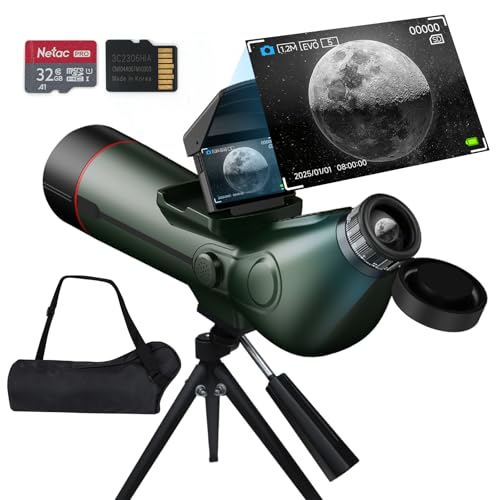
This smart telescope blends a powerful 80mm aperture with a 300mm focal length (f/8.89), delivering bright, clear views and up to 350X magnification for long-distance observing. It also features a foldable external display and a built-in sunshade for daylight use, providing a versatile visual experience. The one-touch photo and video modes simplify capturing celestial moments, while expansion up to 512GB of external storage supports substantial image and video libraries. The dual-screen setup lets users observe in real-time while recording, a practical feature for new astrophotographers.
Key considerations: The 80mm aperture supports good light gathering for beginner-friendly deep-sky work, and the integrated 4K imaging enables capturing detailed frames without additional capture hardware. This model emphasizes ease of use and portability for hobbyists who want quick results.
SVBONY SV48P: Deep Sky Beginner Refractor

The SV48P offers a 90mm aperture and a 500mm focal length, making it a more capable entry-level choice for deep-sky observing. A rotatable two-inch focuser with 1:10 gear ratio provides precise, smooth focusing, essential for sharp planetary and stellar imaging. The metal-interface focusing mount enhances optical axis alignment, improving overall stability and image quality. This model balances light-gathering power with practical handling, making it a versatile option for beginners exploring nebulae, star clusters, and the Moon.
Key considerations: The larger aperture improves light collection for fainter objects, while the robust focuser supports precise framing for astrophotography attempts. Consider this if you plan longer exposure imaging or star-field work as you gain experience.
SVBONY MK127: Maksutov Cassegrain For Planets And Deep Sky

The MK127 is a 127mm aperture Maksutov-Cassegrain OTA designed for planetary detail and deep-sky imaging. Its f/11.8 focal ratio provides a long focal length for high-magnification planetary views while maintaining manageable exposure for astro-imaging. Dielectric coatings and a well-engineered optical path help minimize stray light and enhance contrast, supporting more detailed portraits of planets, nebulae, and star clusters. The design is noted for stability and color fidelity, which benefits both visual observations and imaging workflows.
Key considerations: This tube excels at planetary work and mid-to-deep sky targets. The slower focal ratio requires careful exposure planning for astrophotography but yields crisp, high-contrast results once aligned with appropriate accessories (e.g., a good mount and camera). It’s a strong choice for users prioritizing planetary clarity with optional deep-sky capabilities.
SVBONY SV105 Camera: Entry-Level Astrophotography
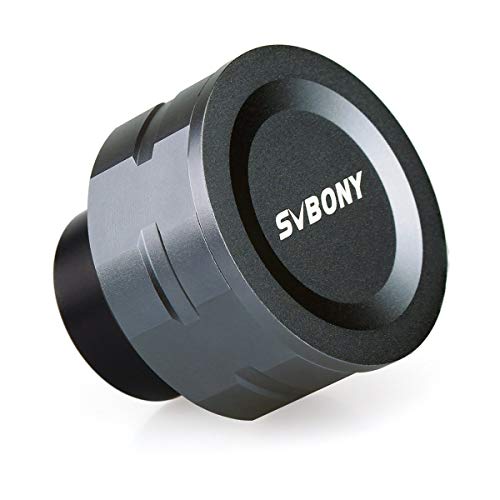
The SV105 is a USB 2.0 color astrophotography camera with the IMX307 sensor. It’s tailored for lunar and planetary imaging, offering straightforward plug-and-play operation without driver installation in many setups. Users can capture quick videos and transfer real-time views to a PC, enhancing the learning curve for new astronomers. Compatibility with Windows, Linux, and Android platforms via appropriate software (SharpCap, AstroDMx Capture, etc.) supports flexible imaging workflows. The camera is designed to be beginner-friendly while enabling entry-level imaging projects.
Key considerations: The SV105 is a practical gateway into astrophotography, especially for those focusing on bright, high-contrast targets. It benefits users who want a simple, cost-effective path to capturing planetary sequences and lunar details, with room to grow as skills develop.
Buying Guide: Key Purchase Considerations And Comparisons
- Target use: Visual astronomy versus imaging. Refractors like SV503 and SV48P are strong for wide-field views and initial imaging, while longer focal-length designs such as MK127 excel in planetary detail and deep-sky imaging with proper equipment.
- Aperture and focal length: Larger apertures gather more light but can be heavier and pricier. Focal length determines magnification and field of view; shorter f-ratios favor wide-field imaging, while longer focal lengths favor higher magnification targets.
- Optical design: Refractors minimize maintenance and offer sharp, color-accurate images; Maksutov-Cassegrains provide high-contrast planetary views with compact form factors but slower imaging potential.
- Field flattening and aberration control: Built-in field flatteners, as seen in SV503, reduce edge distortion, making post-processing easier and imaging more consistent across the field.
- Focuser quality: A robust, smooth focuser (e.g., 2″ rotatable, 1:10 gear ratio) helps achieve precise focusing, crucial for both planetary details and deep-sky frames.
- Mount compatibility and stability: A sturdy mount is critical for long-exposure imaging. Consider a mount with adequate payload capacity, stable tripods, and accurate alignment tools.
- Camera integration: Dedicated astrophotography cameras (like SV105) and color sensors simplify workflow, but ensure compatibility with software and that your computer or tablet supports the needed processing tools.
- Portability and setup time: Some models offer quick setup and portability (e.g., refractors with built-in features). If you travel to dark-sky sites, lighter kits with simpler assembly can be advantageous.
- Future scalability: Consider whether you plan to expand with filters, guiding systems, or larger accessories. A modular approach helps extend the telescope’s useful life as skills grow.
- Budget alignment: Entry-level options provide a strong learning platform, but plan for essential accessories (mount, power supply, batteries, software) to maximize performance and reduce upgrade cycles.
These considerations help balance immediate usability with long-term imaging ambitions. When selecting a telescope for both visual viewing and astrophotography, prioritize models that combine a solid optical design with reliable field performance, ease of use, and room for growth in accessories and mounts.