Solar power generator systems offer a resilient way to keep essential appliances running during outages or outdoor excursions. This article compares five top-rated kits and standalone units designed for American homes, camping, and off-grid living. You’ll learn how to match capacity, voltage, and solar input with your power needs, while weighing portability against long-term reliability. The selections below emphasize real-world performance, safety, and ease of use for a typical household or RV setup.
| Product | Brand | Key Feature |
|---|---|---|
| OUPES Guardian 6000 Solar Generator Kit | OUPES | 4608Wh capacity with 6000W output; dual voltage 120V/240V; included 2x240W panels |
| Jackery Solar Generator 1000 V2 | Jackery | 1070Wh LiFePO4 battery; 1500W AC, fast charging |
| ZeroKor 300W Portable Solar Generator | ZeroKor | 300W capacity with 60W panel; multiple outlets including USB-C |
| ZeroKor 100W with Foldable Panel | ZeroKor | 100W base kit; compact with AC/DC/USB outputs |
| Apowking 146Wh Solar Power Bank | Apowking | Small, portable kit with 40W panel; seven outputs |
OUPES Guardian 6000 Solar Generator Kit
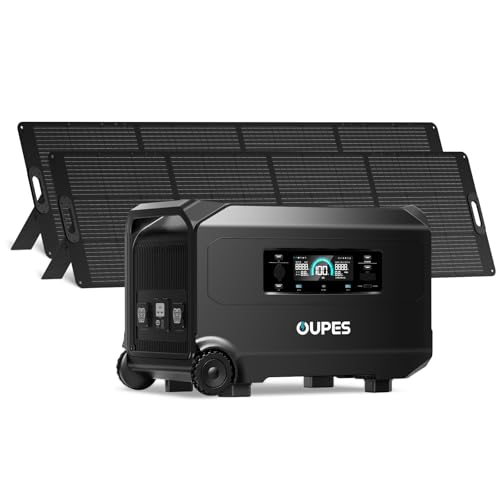
The Guardian 6000 kit provides a robust solution for off-grid living and whole-house backup. The power station offers 4608Wh of stored energy and supports a 6000W continuous output with a 7200W boost, enabling it to run heavy loads such as refrigerators, sump pumps, or medical equipment. Two included 240W solar panels enable immediate solar charging and quick replenishment after an outage. The system is designed for home integration, connecting to standard transfer switches or inlet boxes without extensive wiring, reducing the need for professional installation. Dual voltage output supports both 120V and 240V devices, broadening compatibility for common household appliances.
Designed for reliability, this kit emphasizes a straightforward setup, real-world performance, and safety. The dual-voltage capability means you can preserve critical loads in both common American households and multi-appliance setups. It is important to plan for heat and efficiency: higher loads will draw more from the 4608Wh base, so consider daily energy use when sizing the system. The included solar panels help maintain readiness by replenishing energy during sunny days, making it suitable for weather-related outages, cabin power, or emergency preparedness.
Jackery Solar Generator 1000 V2

Jackery’s Explorer 1000 V2 pairs a 1070Wh LiFePO4 battery with a high 1500W continuous AC output and a 3000W surge. Weighing around 23.8 pounds, it remains portable for outdoor activities while delivering ample power for mid-size appliances. A standout feature is the one-hour fast charging capability when using emergency charging via the Jackery app, useful for time-sensitive setups or quick turnarounds during travel. The durability of LiFePO4 cells contributes to a long lifespan with consistent performance, maintaining a substantial fraction of capacity after thousands of cycles, which supports longer-term reliability for homeowners and campers alike.
For households seeking a balance between portability and capacity, this model offers strong performance in a compact form. While it cannot match the Guardian 6000 in raw energy storage, its portability makes it ideal for RVs, camping, or backup support for essential devices. Prospective buyers should assess daily energy needs and consider potential expansion with modular units if higher capacity is required over time.
ZeroKor Portable Solar Generator With 60W Panel

This kit centers on portability with a 300W nominal capacity and a 60W solar panel. It includes multiple charging outlets: two 110V AC outlets (up to 300W total), USB ports, and a DC port, plus a built-in SOS flashlight. The compact design is suited for light camping, short outages, or to power small devices during travel. However, it warns about device power limits—using appliances above 300W can strain the unit, so plan loads carefully. The modular approach allows easy transport and quick recharging from solar or wall outlets, making it a flexible option for on-the-go power users who prioritize lightweight gear.
Ideal for day trips, light camping, or as a supplementary power source for a small apartment, this ZeroKor option complements larger systems when you need mobility and rapid deployment without heavy equipment.
ZeroKor 100W Foldable Solar Panel Kit

ZeroKor’s 40W foldable panel option adds versatility to compact solar charging. While paired with a 100W base kit, it emphasizes portability and quick setup, making it well-suited for backpacking, small apartments, or emergency kits. The kit supports multiple charging modes and outlets, enabling users to recharge a portable power bank from a wall outlet or via solar input. As with all smaller kits, total energy storage is limited, so this option is best for keeping essential devices powered or topping off a larger system during steady sun.
Users should assess their daytime solar availability and energy requirements. A foldable panel’s portability is balanced by lower daily energy generation compared with larger setups, so it pairs best with systems designed for light to moderate energy needs or as a supplementary charging source.
Apowking 146Wh Solar Power Bank

The Apowking 146Wh solar power bank emphasizes ultra-portability in a compact form. It features seven outputs, including two AC outlets (up to 110V), USB ports, and a DC car port. With a 40W solar panel included, this unit is designed for quick top-ups and device recharges during travel, hiking, or small outages. The lithium-ion battery provides reasonable capacity for streaming devices, charging phones, or running small electronics. While it cannot handle heavy appliances, its slim profile, multiple outputs, and solar recharge capability make it a practical companion for emergency kits or day-to-day mobile use.
Buying Guide: Key Purchase Considerations
- Capacity and power output: Choose a system that can sustain your essential loads for several hours. Higher Wh and wattage ratings support longer outages and higher-demand appliances, such as refrigerators or medical devices.
- Voltage and compatibility: Ensure the system supports 120V or 240V depending on your home wiring and equipment. Some units offer dual-voltage outputs for broader compatibility.
- Battery chemistry and cycle life: LiFePO4 batteries offer longer lifespans and safer chemistry than some other options. Consider expected cycles and how capacity degrades over time.
- Solar panel input and MPPT: Panels should be compatible with the battery system and feature efficient MPPT charge controllers to maximize solar harvesting in varying conditions.
- Portability vs. expandability: All-in-one kits are convenient for quick deployment and house backup, while modular systems (battery plus panels) can scale with growing energy needs.
- Safety features: Look for overcharge, short-circuit, and thermal protections. Certifications and reputable brands help ensure reliability and safety in home environments.
- Charging speed: Fast charging options reduce downtime. Some units offer rapid wall charging in addition to solar charging, which can be advantageous during outages.
- Use-case relevance: For home backup, prioritize higher capacity and robust outlets. For camping or RV use, portability and weight become more important without sacrificing essential outputs.
- Maintenance and support: Consider warranty terms, customer service quality, and the ease of obtaining replacement parts or batteries if needed.
When choosing a solar power generator system, align your selection with specific goals: full home backup, partial load support during outages, or portable power for outdoor activities. The five featured products span large-capacity, high-output solutions suitable for standby home use, as well as compact units designed for travel and emergencies. By weighing capacity, output, and portability, you can select a system that meets daily energy needs while staying within practical size and budget constraints.