Finding the right laptop for aerospace engineering means prioritizing CPU power, RAM, storage, display quality, and reliable build for long study sessions. The following selections are tailored for students who run CAD software, simulations, programming, and heavy research tasks. Each pick balances performance, portability, and value, helping readers compare options that fit typical coursework and project workloads.
Summary table of chosen products:
| Product | Brand | Key Strength | Display | Storage |
|---|---|---|---|---|
| HP 14″ Student-Laptop | HP | Quad-Core CPU, Copilot AI | 14″ HD | 128GB UFS + 128GB SD |
| Auusda Student Laptop | Auusda | Balanced AMD-like performance | 14.1″ FHD | 256GB SSD |
| BulbaCraft Engineering Stickers | BulbaCraft | Motivation & personalization | N/A | Sticker sheets |
| Kit’s Kiss Engineer Keychain & Charms | Kit’s Kiss | Gifts & accessories | N/A | Keychain |
| AE86 i5 Laptop | AE86 | Powerful Core i5 with 24GB RAM | 2K/IPS | 512GB SSD |
HP 14″ Student-Laptop With Copilot AI

The HP 14″ student laptop is a compact option designed for on-the-go study sessions and campus lab work. It features a quad-core Intel processor to support multitasking across research tools, CAD viewers, and office applications. With 16GB RAM, it handles multiple browser tabs and lightweight simulations, while the combination of 128GB UFS storage plus a 128GB MicroSD card offers flexible space for documents, datasets, and course materials. An integrated Copilot AI assistant helps streamline tasks, making it suitable for students who rely on smart suggestions during projects and writing assignments. The 14″ HD display provides adequate viewing for detailed charts and diagrams, with an anti-glare coating to reduce eye strain during long sessions. Battery efficiency supports extended study periods between charges.
Strengths for aerospace coursework include strong multitasking capacity, expandable storage, and a productivity-focused software partner in Copilot AI. Lightweight and portable, this option is particularly appealing for students who attend multiple lectures and lab sessions each week. While the display is 1366×768, it remains usable for document editing, CAD previews, and code work, especially for those prioritizing mobility over ultra-high resolution. The laptop’s energy-efficient design helps ensure longer battery life for fieldwork or library sessions.
Auusda Student Laptop: 14.1″ FHD, 8GB RAM, 256GB SSD

The Auusda option provides a balanced mix of performance and practicality for aerospace students. Powered by a 4-core N5095 processor, it handles daily coursework, virtual lectures, and documentation tasks with ease. The combination of 8GB RAM and a 256GB SSD delivers solid boot times and responsive file access, making it suitable for students who run multiple productivity apps and browser tabs. The 14.1″ Full HD display delivers clear visuals for reviewing CAD drawings and lecture materials. A built-in numeric keypad can speed up data entry for engineering calculations and spreadsheets, which can be advantageous during coursework planning and budgeting tasks.
This model aims to strike a middle ground between performance and budget, offering a quiet, low-noise computing experience. Battery life is typically adequate for a full day of classes, though heavy CAD rendering may benefit from closer-to-average workloads or occasional charging during longer study sessions. The device is well-suited for students who value a larger keyboard and a reliable workhorse laptop for everyday engineering tasks.
BulbaCraft Engineering Stickers Bundle

This product isn’t a laptop but serves as a fun, practical accessory for aerospace students who want to personalize their gear. The engineering-themed vinyl stickers are designed for water bottles, laptops, and other surfaces, offering durability and vibrant colors. The sticker sheets reduce the risk of damage compared to loose decals, providing multiple options for customization. They’re waterproof, ensuring resilience in lab environments or outdoor study spots. While not a hardware choice, stickers can boost motivation and make note-taking setups feel more personalized during long design sessions or group projects.
Kit’s Kiss Engineer Keychain & Charms
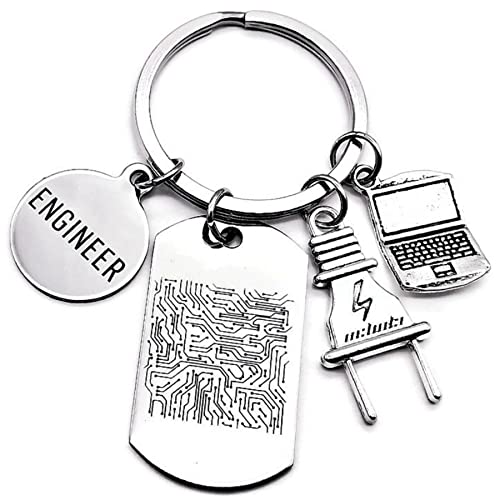
Another accessories-focused option, the Kit’s Kiss engineer keychain collection provides game-changing desk and bag details for students who value organization. The circuit board, ruler, compass, and related charms offer a subtle nod to engineering disciplines. The 1.38-inch diameter key ring makes it easy to attach to backpacks or lab gear, serving as a lightweight motivational item rather than performance hardware. For aerospace students, these charms can be used to mark study materials, lab tools, or project folders, contributing to an organized workflow in busy academic environments.
AE86 i5 Laptop: 24GB RAM, 512GB SSD, 2K Display

The AE86 i5 laptop targets higher-performance needs for aerospace students who run heavy software stacks. It combines a Core i5 processor with 24GB RAM and a 512GB SSD, enabling smoother multitasking across CAD tools, simulation software, and programming environments. The 2K display (2160×1440) offers sharper visuals for detailed engineering drawings and data analysis. Preloaded productivity software, including an Office Pro Plus license, supports coursework from report writing to project documentation. The device’s robust connectivity and modern I/O options suit users who frequently transfer large design files and datasets across devices and external displays.
AE86 14.1″ Laptop With 2K Screen (Other AE86 Model)

This AE86 variant emphasizes a 14.1-inch 2K display and a strong core performance package suitable for engineering coursework. The 16GB RAM and 512GB SSD deliver responsive multitasking, with a dual-band Wi-Fi 5 and multiple USB ports ensuring versatile connectivity for external devices, projectors, or CAD peripherals. The upgraded screen size and resolution benefit users working with intricate design schematics, large spreadsheets, and high-detail simulations. While it targets business students, its performance characteristics align with aerospace tasks that require clear visuals and steady processing power for extended lab sessions.
Buying Guide: Key Considerations for Aerospace Engineering Students
- Processor and RAM: Prioritize multi-core CPUs and at least 16GB RAM for CAD programs, simulations, and virtualization. Consider 24GB for heavy workloads or multitasking with multiple software packages.
- Storage: A fast SSD (512GB or larger) helps with large project files and quick boot times. Look for additional expandable storage via microSD or external drives if needed.
- Display: A high-resolution, color-accurate display with good viewing angles is important for reviewing CAD drawings and 3D models. A 14- to 15.6-inch panel balances readability with portability.
- Graphics: Mid-to-high-end integrated or a dedicated GPU can improve rendering and visualization, especially for simulations and 3D modeling.
- Battery life: Long battery life supports library sessions, field measurements, and extended lab work without frequent recharges.
- Build and portability: A sturdy chassis, comfortable keyboard, and lightweight design help during campus commutes and lab setups.
- Connectivity and ports: At least USB-C, USB-A, HDMI, and SD card slots support data transfer, external displays, and lab equipment connections.
- Software compatibility: Ensure the laptop supports essential engineering software, compilers, and IDEs used in coursework and research.
- Security and privacy: A privacy screen option and camera shutter can protect sensitive project data in shared spaces.
- Warranty and support: A reliable warranty and prompt customer service are beneficial for students who rely on their device daily.
When selecting a laptop for aerospace engineering studies, balance performance with portability. For heavy CAD work or simulations, higher RAM and a capable CPU are worth the investment. For budgeting, models with 16GB RAM and robust storage provide a solid base, with upgrade paths via external drives or internal expansion where possible. Consider your typical workflow, whether you prioritize screen quality for design, or battery life for fieldwork, to guide the final choice.