Discover top wireless and USB microphones that optimize computer recordings, calls, and streaming. This guide highlights five reliable models, comparing noise reduction, ease of use, battery life, and compatibility to help you choose the right microphone for projects like podcasts, live streams, and online meetings.
Product Overview
| Product | Brand | Type | Key Features |
|---|---|---|---|
| GoorDik USB C Lavalier Microphone Wireless Mini Mic | GoorDik | USB-C Wireless Lavalier | Active denoise, 2 windscreen muffs, 6–12 hours per transmitter, USB-C charging |
| EMEET M0 Plus Conference Speakerphone | EMEET | Bluetooth Conference Speakerphone | 4 AI mics, 360° pickup, Daisy Chain up to 16 attendees, noise reduction |
| Gicorino Wireless Lavalier Microphone (2 Pack) | Gicorino | 2-Pack Wireless Lavalier | Automatic pairing, omnidirectional pickup, noise reduction |
| MAONO PD100W USB Wireless Microphone | MAONO | USB Wireless Desktop Mic | Dual USB/2.4G modes, one-click noise reduction, RGB lighting |
| DUNGZDUZ USB Microphone for Laptop/PC | DUNGZDUZ | USB Desktop Microphone | High sensitivity condenser, plug-and-play, compact design |
Note: All five selections are designed to connect to computers, with a mix of USB-C, USB-A, and wireless options. Each option offers varying degrees of noise reduction, battery life, and ease of use, enabling clear voice capture for calls, streams, and recordings.
GoorDik USB C Lavalier Microphone Wireless Mini Mic

The GoorDik USB C wireless lavalier mic is designed for mobile and desktop recording with a Type-C interface. It offers active denoise technology and two noise reduction modes to balance ambient clarity with natural vocals. Included windscreen muffs and foam covers help reduce wind noise during outdoor shoots or in windy rooms. The system uses plug-and-play operation with a simple interface that shows function indicators for noise reduction, original sound, and mute. Each transmitter includes a magnetic clip for directional pickup, enabling flexible placement for optimal coverage. Battery life spans 6–12 hours per transmitter, with a charging cable enabling simultaneous charging of both transmitters. A USB-C port on the receiver allows phone charging to maintain session continuity.
EMEET Conference Speakerphone M0 Plus

The EMEET M0 Plus delivers 360° voice pickup via four AI mics and advanced VoiceIA noise suppression to reduce background noise and echoes. Its 3W speaker output provides even room coverage with full duplex audio for natural conversations. The unit supports a Daisy Chain to connect multiple speakers for larger meetings, enabling scalable setups up to 16 participants, making it suitable for mid-size conference rooms and hybrid meetings. The system emphasizes clear, natural audio reproduction for participants across distances and environments.
Gicorino Wireless Lavalier Microphone (2 Pack)
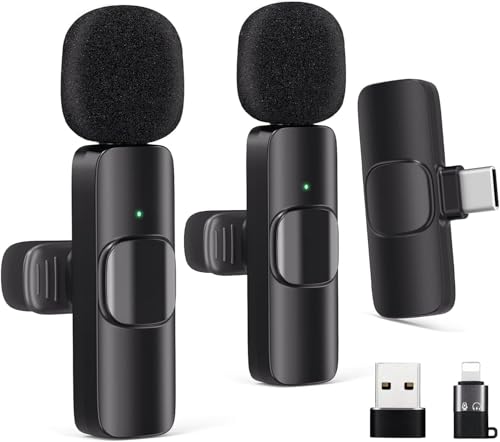
Gicorino’s two-pack wireless lavalier system emphasizes user-friendly pairing and omnidirectional pickup. Automatic pairing reduces setup time, and the included windscreen helps mitigate plosives and wind. The microphones are designed to be compatible with iOS, Android, laptops, and cameras, supporting various recording scenarios—from interviews to live streaming. A compact profile and plug-and-play connection keep desk space tidy and straightforward for creators working solo or with a small crew.
MAONO PD100W USB Wireless Microphone

The PD100W from MAONO emphasizes wireless freedom with a dual USB 2.0 wired and 2.4G wireless mode, delivering flexibility for desktop use, mobile streaming, gaming, and online meetings. It features a one-click noise reduction control, allowing quick transitions from casual chat to broadcast-ready sound. An adjustable, user-friendly interface supports easy setup across devices, and the built-in windscreen reduces plosives for clearer voice capture. The design aims for a clean desk aesthetic while maintaining reliable performance for content creators.
DUNGZDUZ USB Microphone For Laptop And Desktop

This compact USB microphone from DUNGZDUZ packs high sensitivity into a small form factor. It targets clear calls and straightforward plug-and-play use without requiring drivers. The microphone’s design suits work and study environments, delivering reliable performance in virtual meetings, online classes, and voice recordings. Its compact size helps keep desktops organized while delivering noticeable improvements over built-in laptop mics.
Buying Guide
Key purchase considerations help match a microphone to your setup and goals. Consider the following aspects when choosing a Bluetooth or USB microphone for computer use.
- Connection type and compatibility: USB-C, USB-A, and Bluetooth options offer different device compatibility. USB-C is common on newer laptops and tablets, while USB-A remains widely supported. Some models provide wireless transceivers with proprietary receivers for stable connections. Ensure your computer supports the selected interface.
- Pickup pattern and coverage: Omnidirectional mics capture sound from all directions, suitable for single-person recordings in a quiet space. Cardioid mics focus on the speaker and reduce side noise, ideal for noisy environments. 360-degree conference setups benefit from multi-mic arrays and room-scale coverage.
- Noise reduction and wind handling: Active denoise, AI-based noise suppression, and windscreen accessories significantly improve audio quality in imperfect environments. Consider the balance between natural voice reproduction and aggressive noise cancellation to avoid muffling.
- Battery life and charging: For wireless lavaliers, check per-transmitter battery life and whether the system supports simultaneous charging. For desk USB mics, consider power draw and whether a powered hub is needed in your setup.
- Ease of use and setup: Plug-and-play functionality reduces setup time. Look for clear indicator lights, intuitive app-free controls, and reliable pairing for quick deployment during live streams or meetings.
- Multi-device flexibility: If you work across devices (PC, Mac, iPhone, Android), ensure cross-platform compatibility and any required adapters or OTG settings are considered.
- Privacy and control: Some mics include mute indicators and quick mute methods, which can be valuable during calls and broadcasts to protect privacy or manage background noise.
When evaluating options, weigh the importance of mobility, room size, and audience reach. For solo creators streaming from a small space, a compact USB microphone with good noise suppression may suffice. For conference calls or team meetings in larger rooms, a multi-mic system with expandability and room coverage can improve clarity and reduce fatigue for listeners.
Overall, the right microphone depends on your recording environment, device ecosystem, and the level of professional polish you need. The five products highlighted here provide a range of wireless and wired solutions designed to enhance computer-based audio for videos, podcasts, live streams, and meetings.