For newcomers and aspiring tinkerers, a beginner Arduino kit is the fastest way to learn electronics, programming, and hands-on project building. The kits below include UNO and Mega boards, tutorials, and a broad range of components to explore sensors, actuators, and simple IoT ideas. This guide highlights five top options with included tutorials, pre-soldered modules, and well-organized component sets, offering clear paths from first circuit to advanced projects.
The following table summarizes the five selected kits to help you compare at a glance:
| Product | Board Type | Core Benefit | Included Tutorials |
|---|---|---|---|
| ELEGOO UNO Project Super Starter Kit | UNO R3 | Economical entry point with clear tutorial package | More than 22 lessons |
| ELEGOO Mega R3 Project | MEGA2560 | Extensive parts and 35+ tutorials for advanced beginners | More than 35 lessons |
| Official Arduino Starter Kit | UNO R3 | Official kit with comprehensive projects and English guide | 12 projects with English guide |
| UNO R3 Kit Mega328 Tutorial Kit | UNO R3 compatible | Wide range of components with 200+ items | 40-in-1 projects (course material) |
| SunFounder Elite Explorer Kit | Uno R4 WiFi | Most complete starter with IoT and video tutorials | 60+ video lessons |
ELEGOO Uno Project Super Starter Kit

The ELEGOO UNO Project Super Starter Kit centers on the UNO R3 board and includes a PDF tutorial with more than 22 lessons. It is designed as a cost-effective entry point for those beginning electronics with the Arduino platform. A notable component is the LCD1602 module with a pin header, which avoids the need for soldering by the user. This kit emphasizes easy setup, an organized component assortment, and approachable guidance for new learners.
ELEGOO Mega R3 Project Starter Kit
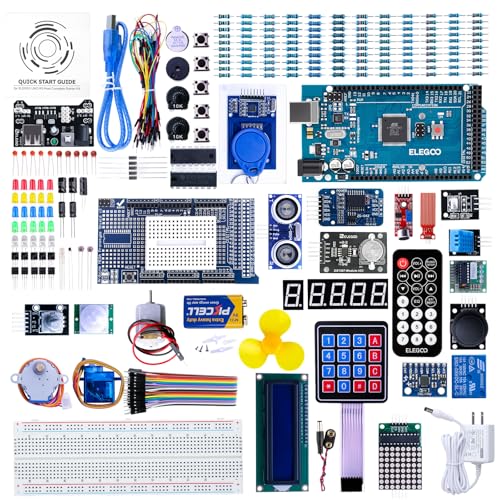
Targeted at more ambitious beginners, this MEGA2560-based kit bundles over 200 components and a PDF tutorial with more than 35 lessons. The package typically includes an LCD1602 module and a GY-521 sensor module with headers that reduce soldering requirements. The breadth of modules allows hands-on practice across sensors, actuators, and basic IoT concepts, enabling scalable learning from simple to more complex projects.
ELEGOO UNO R3 Project Starter Kit

ELEGOO’s UNO R3 project kit advertises more than 200 components and a comprehensive set of Arduino-friendly modules. It includes a PDF tutorial with more than 30 lessons and a CD containing the example code. The modules come soldered for quick wiring, making it a practical jump from basic circuits to integrated projects for hobbyists and learners seeking a broader toolkit.
Official Arduino Starter Kit
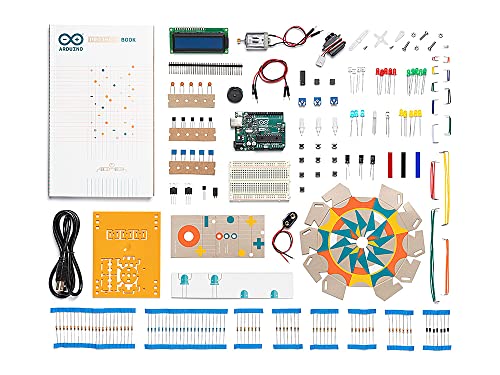
The Official Arduino Starter Kit provides a curated introduction with 12 hands-on DIY projects and an English-language project book. It is designed for beginners who want a structured, project-driven entry into electronics and microcontroller programming, with detailed explanations and guided wiring diagrams. The kit is compatible with the Arduino IDE and offers a solid foundation for iterative learning.
UNO R3 Kit Mega328 Tutorial Kit

This kit emphasizes a broad range of components across 63 modules, including sensors, LED arrays, breadboard compatibility, and more. It provides HD video tutorials (24 structured lessons plus 60+ online videos) and free email technical support, which helps beginners progress through progressively challenging projects without getting stuck. All modules are pre-soldered for immediate experimentation.
DFRobot Basic Electronics Starter Kit

DFROBOT’s basic electronics starter kit bundles 83 components with a UNO R3-compatible board and a USB cable, designed for college STEM courses and self-guided learning. The parts are pre-labeled for easy identification, minimizing setup time. It includes 12 progressive projects with detailed tutorials, wiring diagrams, and ready-to-use sample code to help learners grasp electronics fundamentals and programming logic without frustration.
REXQualis Super Starter Kit
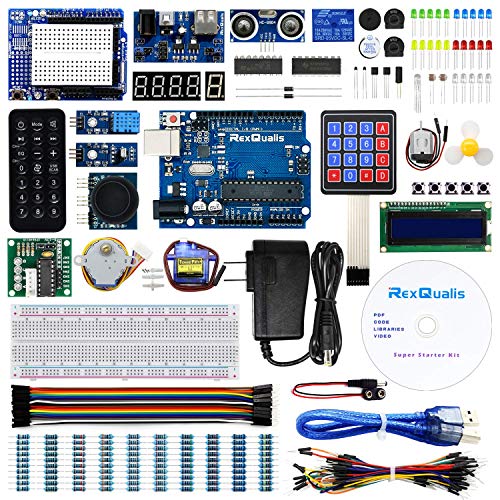
REXQualis offers a budget-friendly starter kit based on Arduino UNO R3 with a 9V 1A power adapter and an LCD1602 module. The kit emphasizes a solid base board compatible with Arduino IDE and a range of sensors and actuators, including servo and motor components, to support a variety of beginner to intermediate projects. The included tutorials help learners translate theory into hands-on results.
Buying Guide: Key Factors for Selecting a Beginner Arduino Kit
- Board compatibility and upgrade path: Beginners should choose a kit built around UNO R3 or MEGA2560, with clear upgrade paths to more capable boards as skills grow.
- Component breadth and quality: Look for kits with a balanced mix of sensors, actuators, LEDs, and breadboards. Pre-soldered modules reduce initial friction for new learners.
- Tutorial quality and language: Strong tutorials and English-language guides are essential for clear understanding. Check for step-by-step projects and downloadable resources.
- Project progression: A structured set of projects (beginner to intermediate) helps learners build confidence and reinforce concepts.
- Support resources: Availability of online videos, forums, and technical support can accelerate learning when encountering roadblocks.
- Physical packaging and labeling: Labeled components, labeled bags, and clear manuals minimize frustration during first builds.
- Value and scope: Balance cost with the number of components and tutorials included. A slightly higher initial investment can yield more long-term learning opportunities.
- Safety and compliance: RoHS compliance and safe power options are important for younger users and classrooms.
Across these options, the best kit for a beginner balances an approachable learning curve with a rich toolkit for experimentation. For students and hobbyists aiming to expand into IoT or robotics, kits with more than 100 components and extensive video content can provide longer-term value. The choice should align with the learner’s goals, available time for projects, and preferred learning style.