Choosing the right antenna set for FPV goggles can dramatically affect range, signal stability, and overall flight experience. This guide spotlights five well-regarded FPV antenna options designed for 5.8 GHz systems, covering lollipop, patch, panel, and mushroom styles. Each product is compatible with popular Fatshark and other FPV goggles, delivering robust performance across varied flight conditions. Read on to compare designs, features, and real-world suitability to help you pick the best antenna for your FPV setup.
| Product | Type | Gain (typ.) | Frequency Range | Goggles Compatibility |
|---|---|---|---|---|
| FOXEER Lollipop 4 (Updated) | Lollipop RHCP | 2.5 dBi | 5.5 – 6.0 GHz | FPV Goggles, TX/RX |
| HGLRC Hammer Mini | Long Range RHCP | 2.5 dBi | 5.5 – 6.0 GHz | RC Drones, FPV Goggles |
| SoloGood 5.8G Combo | Flat Panel & Mushroom | 14 dBi (Panel), 7 dBi (Mushroom) | 5.5 – 6.0 GHz | EV800D, FPV Goggles |
| SKYZONE 5.8G Antennas | Flat Panel & Mushroom | — | 5.5 – 6.0 GHz | FPV Goggles Receiver |
| MEIVIFPV RUSHFPV Patch | Patch | 11 dBi (2x) | 5.5 – 6.0 GHz | FPV Goggles, TX/RX |
The following sections provide detailed overviews of each product, including design approach, build quality, and practical considerations for different FPV setups. Each description stays concise while covering how the antenna enhances signal integrity, ease of installation, and durability in the field.
FOXEER Lollipop 4 Updated Version

FOXEER Lollipop 4 is a 5.7 GHz RHCP antenna designed for robust field performance. It features a 360-degree protection design to minimize feeder loss and improve reliability when orientations change during flight. The IRoot reinforcement helps the antenna maintain shape under impact, which can be beneficial in busy racing environments. The PC+ABS construction combines light weight with resilience, making it suitable for daily FPV use with Fatshark and similar goggles.
HGLRC Hammer Mini 2.5dBi Long Range

The HGLRC Hammer Mini provides a compact RHCP solution with a stated gain of 2.5 dBi, tuned for 5.5–6.0 GHz operation. Its ABS radome offers durable protection against impacts, making it well-suited for portable FPV setups and field testing. This antenna emphasizes reliable long-range transmission and steady signal quality for FPV racing and cruising alike.
SoloGood 5.8G Receiver Parts Combo
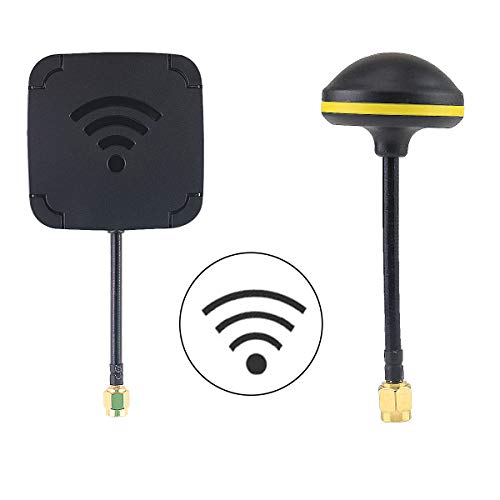
This combo includes a 14 dBi panel antenna and a 7 dBi mushroom antenna, delivering high-gain options for 5.8 GHz FPV links. Suitable for improving reception on FPV goggles like EV800D and compatible RX modules. The dual-antenna approach helps diversify signal capture, potentially reducing blind spots during complex maneuvers or in cluttered environments.
SKYZONE 5.8G FPV Antennas

These SKYZONE antennas offer both flat panel and mushroom styles for FPV receivers, designed to optimize 5.8 GHz transmissions. They are positioned as reliable choices for FPV goggles and flight controllers that demand stable, low-loss reception with straightforward installation. The dual-style option helps users tailor signal capture to their unique flying environments.
MEIVIFPV RUSHFPV Patch Antenna

The RUSHFPV patch design delivers a focused 5.8 GHz signal with improved directional performance for FPV goggles and transmitters. It includes a capability to bend and adjust alignment for better mounting flexibility, and the patch style is renowned for dependable range and signal clarity in racing scenarios. The 11 dBi figure for two antennas suggests robust gain for extended line-of-sight flight.
Buying Guide
When selecting an antenna for FPV goggles, consider the following factors to balance performance with practicality:
- Frequency compatibility: Most FPV systems use 5.8 GHz. Verify the exact sub-band (5.5-6.0 GHz) and the center frequency for best results with your goggles and transmitters.
- Antenna type: Lollipop and patch antennas typically offer good range and directionality, while flat panel and mushroom antennas provide versatility for mounting and reception in different orientations. Consider a mix for primary and backup setups.
- Gain and pattern: Higher gain can extend range but may narrow the beam. If you fly in open spaces, higher gain can be beneficial; for confined spaces, lower gain with broader coverage might be preferable.
- Durability: Look for robust radomes (ABS or similar) and reinforced designs to withstand crashes or rough handling during races or field use.
- Compatibility and mounting: Ensure the antenna connector type and physical dimensions fit your goggles and RX modules. Some designs bend or flex to aid mounting in tight spaces.
- Weight and bulk: Lighter, compact antennas reduce added drag and balance concerns on smaller drones or headsets.
- Installation ease: Quick-connect or clamp-style mounts help with field swaps between different goggles or transmitters.
In practice, many pilots prefer a small, high-gain patch or lollipop for main use, paired with a versatile mushroom or panel antenna as a secondary option. This combination supports stable performance across diverse environments—from open fields to wooded tracks—while keeping the setup flexible for field adjustments.