Finding a reliable HDMI cable that supports 4K at 120Hz and beyond can improve gaming fluidity, reduce screen tearing, and ensure bright, accurate imagery across consoles, PCs, and media players. This guide highlights five top options that deliver 48Gbps bandwidth, HDMI 2.1 features, and robust durability. Each selection is assessed by performance, compatibility, build quality, and value to help you choose the right cable for 4K 120Hz experiences.
| Product | Brand | Length | Key Feature |
|---|---|---|---|
| Highwings 8K/4K HDR Cable | Highwings | 6.6 ft / 2 m | 8K@60Hz, 4K@120Hz, 48Gbps, HDR10 |
| Ubluker Ultra High Speed Cable | Ubluker | 6.6 ft | 48Gbps, 8K@60Hz, 4K@240Hz, HDR10+, HDCP 2.3 |
| Silkland E‑Braid Cable | Silkland | 6.6 ft | HDMI 2.1 certified, 4K@120Hz/144Hz, 8K@60Hz, HDR10+, eARC |
| Anker 8K@60Hz Cable | Anker | 6.6 ft | 48Gbps, 8K@60Hz, 4K@120Hz, dynamic HDR, eARC |
| Capshi 30ft 8K 4K@120Hz Cable | Capshi | 30 ft | 48Gbps, 8K@60Hz, 4K@120Hz, VRR/QMS/QFT, HDR, eARC |
All five cables above are designed to maximize 4K 120Hz gaming and streaming, with certification, solid shielding, and braided builds for longevity. The table summarizes core strengths to help you compare at a glance.
Highwings 8K/4K Ultra High Speed Cable
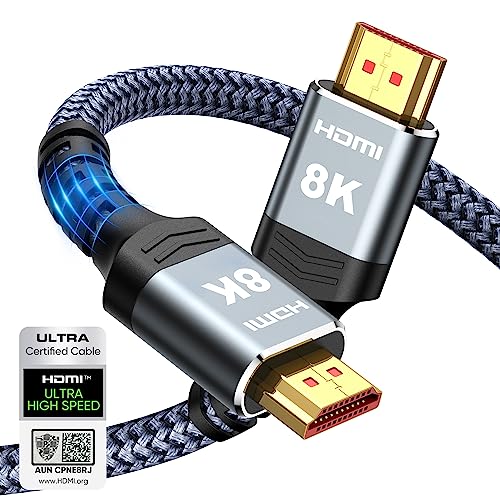
The Highwings cable claims 8K@60Hz compatibility alongside 4K@120Hz, using a 48Gbps bandwidth to minimize frame drops and ensure precise signal processing. It is backward compatible with older HDMI standards, facilitating use with legacy devices. The construction emphasizes stability for gaming enthusiasts, with a braided design intended to resist wear and tangling.
Ubluker 6.6 ft HDMI Cable

Ubluker emphasizes certification and broad feature support, including 48Gbps bandwidth and compatibility with 8K@60Hz and 4K@240Hz at high refresh rates. The cable supports advanced HDR formats (HDR10+), all-mode compatibility (ALLM, VRR, QMS, QFT), and HDCP 2.2/2.3. The design targets both home theater setups and PC gaming, delivering reliable signal integrity over longer runs.
Silkland 6.6ft HDMI 2.1 Cable

Silkland highlights HDMI 2.1 certification with guaranteed high-bandwidth performance and gaming-oriented capabilities. It supports 4K at up to 120Hz and 144Hz across platforms, including PS5, Xbox, and PC. The product promotes an “E-Braid” technology for enhanced durability, leveraging dual-layer windings and nylon braiding to minimize signal interference and physical wear.
Anker 8K@60Hz 6.6ft Cable

Anker’s entry focuses on future-proofing with 8K@60Hz support and 48Gbps bandwidth, ensuring both 4K@120Hz and 8K scenarios perform smoothly. The cable emphasizes HDMI Forum certification and EMI shielding to protect against interference. It’s marketed toward Next-Gen consoles like PS5 and Xbox Series X/S, as well as compatible high-end TVs, streaming devices, and PC setups.
Anker 8K@60Hz 10ft Cable

With the same 48Gbps bandwidth and 8K/4K support, this longer variant suits setups where devices are farther apart. It emphasizes durability with flexible construction designed to endure repeated bending, making it a practical choice for living rooms and entertainment centers where cables run behind furniture or along walls.
Highwings 3.3ft 8K/4K Braided Cable

This shorter option emphasizes portability and proximity setups. It supports 8K@60Hz and 4K@120Hz with a 48Gbps data rate and includes a braided jacket for resilience in busy entertainment spaces. The cable is positioned as suitable for laptops, monitors, Roku TVs, and streaming devices that live on desks or entertainment stands.
Capshi 30ft 8K 4K@120Hz HDMI Cable

Capshi markets a long-run solution with 8K@60Hz and 4K@120Hz performance over 30 feet. The included features cover VRR, ALLM, QMS, QFT, HDR, and eARC. The extended length supports larger rooms, multi-room setups, or home theater configurations where devices are spread out. Braided construction and durable connectors are highlighted for longevity.
Buying Guide: Key Purchase Considerations
When choosing a 4K 120Hz HDMI cable, consider the following factors to align with your setup and future needs:
- Bandwidth and HDMI Version: Look for cables rated at 48Gbps with HDMI 2.1 certification to guarantee 4K@120Hz, 8K@60Hz, and features like VRR, ALLM, QMS, and QFT. Lower-bandwidth cables can cap performance at high refresh rates.
- Device Compatibility: Verify that the cable supports your devices—PS5, Xbox Series X/S, PC GPUs, TVs, and any monitors or projectors you use. Ensure HDR formats (HDR10, HDR10+, Dolby Vision) are supported if needed.
- Length and Signal Integrity: Longer runs can degrade signal. Choose the shortest length that fits your setup, or opt for actively shielded or high-quality braided cables for longer distances (e.g., 30 ft) without compromising signal.
- Build Quality: Braided exteriors, quality connectors, and EMI shielding contribute to durability and longevity. A reliable connector design helps resist wear from frequent plugging and unplugging.
- Certification and Warranty: Look for HDMI Forum certification claims and manufacturer warranties. Certifications reduce the risk of non-compliant behavior and signal issues.
- Gaming Features: If gaming is a priority, prioritize VRR (variable refresh rate) and low latency modes, which can reduce tearing and input lag on compatible consoles and GPUs.
- Future-Proofing: A cable that supports 8K@60Hz and 4K@120Hz provides flexibility for upcoming devices and games, even if your current setup doesn’t yet use all capabilities.
- Price and Value: Compare build quality, features, and length relative to price. A slightly higher upfront cost can yield longer lifespans and fewer replacements.
These considerations help balance performance, durability, and cost, ensuring an HDMI cable that remains suitable as gaming and home theater technology evolves.